

Types of Brushes for Paint by Numbers
- by Paint by number online
-

When painting by numbers, the right brush can make all the difference. Here's a quick guide to the most common brush types and their uses:
- Round Brushes: Great for outlining and medium-sized areas. Adjust pressure for varied strokes.
- Liner Brushes: Perfect for fine lines and small details like hair or highlights.
- Flat Brushes: Ideal for large areas like skies or fields, offering clean, straight edges.
- Filbert Brushes: A mix of flat and round, useful for blending and rounded shapes.
- Spotter Brushes: Best for tiny sections requiring precision.
Tips for Choosing Brushes:
- Use synthetic bristles for acrylic paints; they're durable and easy to clean.
- Match brush sizes to your painting needs: small brushes for details, larger ones for broad areas.
Care for Brushes:
- Rinse immediately after use to prevent paint from hardening.
- Clean with lukewarm water and soap, avoiding excess water near the ferrule.
- Dry brushes flat to maintain their shape.
Paint by Numbers Online kits include a three-piece brush set designed for beginners and experienced artists alike, ensuring smooth strokes and precision. Proper tools and care lead to better results with less effort.
PAINT & CHAT TUTORIAL: Which Brushes to Use When? Large Backgrounds & Detail Work Paint by Numbers
sbb-itb-68cf19f
Common Brush Types in Paint-by-Numbers Kits
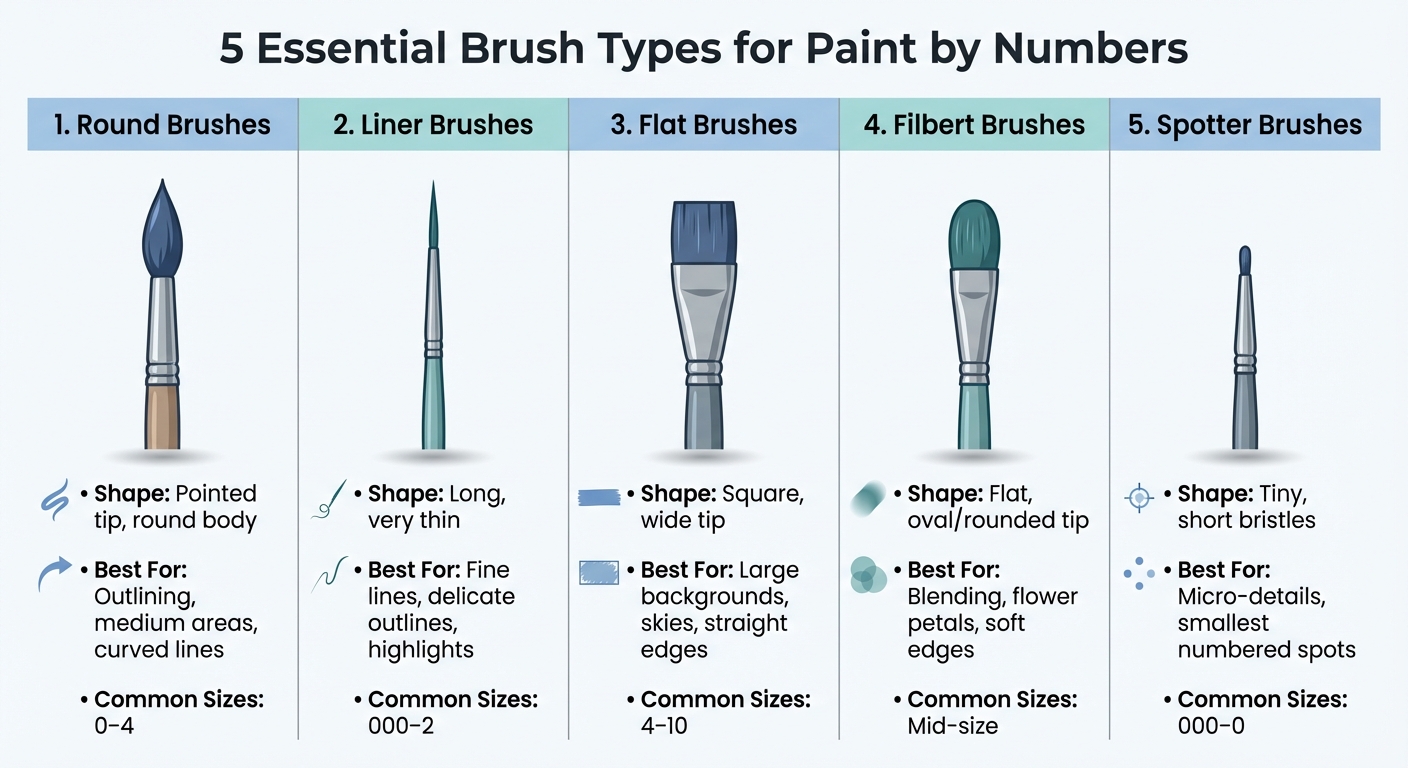
Paint by Numbers Brush Types Guide: Shapes, Uses, and Sizes
Paint-by-numbers kits typically come with a selection of brushes tailored to make painting easier and more precise. Each brush type serves a specific purpose, helping you achieve cleaner results and work more efficiently. Let’s dive into the unique features and uses of these brushes.
Round Brushes
Round brushes are the go-to tools for versatility. Their pointed tip and wider belly make them perfect for sketching, outlining, and filling medium-sized sections like flower petals or facial features. By adjusting the pressure, you can create strokes of varying widths, making these brushes adaptable to different tasks.
Liner Brushes
Liner brushes are designed for precision. With their long, thin bristles, they excel at creating fine lines and intricate details, such as eyelashes, strands of hair, or subtle highlights. Adding a small amount of water to the paint can help improve flow and prevent it from drying too quickly, ensuring smooth, continuous lines.
Flat Brushes
Flat brushes have a wide, square tip, making them ideal for covering large areas like skies or fields. Their sharp edges also allow for crisp, straight lines - just tilt the brush on its side and drag it along the canvas. This dual functionality lets you switch effortlessly between broad strokes and clean edges.
Filbert Brushes
Filbert brushes combine the best features of flat and round brushes. Their flat, oval-shaped tip allows for both broad coverage and finer detail work. These brushes are particularly useful for blending colors and painting rounded shapes, like flower petals, where soft, natural edges are essential.
Spotter Brushes
Spotter brushes are the smallest brushes in the kit, featuring very short bristles for maximum control. They’re perfect for tackling tiny, intricate areas - those minuscule numbered sections where precision is key. When round brushes feel too large, spotter brushes step in to handle the finest details.
| Brush Type | Shape Description | Application | Common Sizes |
|---|---|---|---|
| Round | Pointed tip, round body | Outlining, medium areas, curved lines | 0–4 |
| Liner | Long, very thin | Fine lines, delicate outlines, highlights | 000–2 |
| Flat | Square, wide tip | Large backgrounds, skies, straight edges | 4–10 |
| Filbert | Flat, oval/rounded tip | Blending, flower petals, soft edges | Mid-size |
| Spotter | Tiny, short bristles | Micro-details, smallest numbered spots | 000–0 |
How to Choose the Right Brushes for Your Project
The type and size of brush you use can make a big difference in how smoothly your painting process goes. Picking the right brush ensures you can handle both fine details and larger areas with ease. It's all about matching the brush to the task and knowing what the bristles can handle.
Synthetic vs. Natural Bristles
For paint-by-numbers projects, synthetic brushes are typically the go-to choice. Since most kits use acrylic paints, synthetic bristles - often made from materials like nylon or taklon - are designed to work seamlessly with them. Natural bristles, such as sable or hog hair, are more absorbent and can become waterlogged when used with thicker acrylic paints. This makes them less precise for detailed work. Additionally, synthetic brushes hold their shape better after repeated cleanings, unlike natural bristles, which can absorb water and trap pigment. They’re also a budget-friendly option, providing excellent performance without the cost of high-end natural brushes.
"For paint-by-number artists, the choice is clear: synthetic brushes offer the resilience, control, and easy maintenance needed to create a clean, professional-looking piece of art without the fuss." - paint-by-number.com
Once you've settled on synthetic bristles, the next step is to choose the right brush sizes for your project.
Brush Sizes and Their Uses
Brush size plays a big role in how effectively you can work on different parts of your painting. Sizes are marked with numbers on the handle, with smaller numbers (like 000, 0, and 1) indicating tiny brush heads for fine details, and larger numbers (such as 6, 8, and 12) designed for covering bigger areas. Choosing the right size ensures you can work efficiently without sacrificing precision.
For broad sections like skies or water, flat brushes in sizes 6 to 12 are ideal - they allow you to cover large areas quickly and evenly. Medium-sized areas, such as flower petals or clothing, are best painted with round or filbert brushes in sizes 2 to 4. These brushes strike a nice balance between detail and coverage. When it comes to the smallest details, like eyelashes or tiny numbered spots, detail brushes in sizes 000 to 1 are your best bet. Keeping a variety of brush sizes on hand will let you switch tools as needed and tackle every section of your canvas with ease.
With the right brushes and proper care, you’ll be well-equipped to handle every detail of your paint-by-numbers masterpiece.
How to Clean and Care for Your Brushes
Taking care of your brushes properly is key to making them last and keeping them in great shape. Acrylic paint, for instance, dries into a tough, plastic-like coating, and if it hardens in the bristles, it can ruin your brush for good. To avoid this, rinse your brushes immediately after finishing a section or changing colors. This quick step helps prevent paint from drying in the bristles and keeps your brushes in top condition.
When cleaning, use lukewarm water and a small drop of dish soap. Gently swirl the brush in your hand to create a lather, then rinse until the water runs clear. Be careful not to scrub too hard or tug on the bristles - this can cause them to shed or break. Also, try to keep water out of the ferrule (the metal part holding the bristles) to avoid rust, weakened glue, or bristle loss.
Drying your brushes the right way is just as important. After cleaning, reshape the bristles with your fingers while they're still damp. Lay the brushes flat on a towel to air dry - never store them wet or with the bristles pointing upward, as this can cause them to lose their shape. Once fully dry, you can store them upright with the bristles facing up or in a brush holder to protect the tips. If you’re dealing with dried-on paint, a small amount of mineral spirits or paint thinner can loosen it up. Just make sure to rinse thoroughly with water afterward.
Taking these steps will help your brushes stay in great condition for many projects to come.
Brushes Included in Paint by Numbers Online Kits

Each Paint by Numbers Online kit comes with a professional three-piece brush set tailored for various painting needs. The set includes a fine-tipped detail brush for intricate areas, a versatile filbert brush for medium sections, and a flat brush for covering larger spaces. These brushes are designed with durable synthetic bristles, perfect for acrylic paints, and provide the right stiffness for smooth, even strokes across the canvas.
The brushes feature double-crimped ferrules, which help prevent bristle shedding or splitting, ensuring clean, precise lines throughout your project. Their ergonomic handles - crafted from wood or with non-slip grips - are designed to reduce hand fatigue, making them comfortable for both beginners and experienced artists. This attention to detail contributes to the high customer satisfaction these kits receive.
With a 4.8/5-star rating based on over 2,400 customer reviews, Paint by Numbers Online kits are widely praised for their quality. Customers often highlight the brushes' precision and durability. For those who want even more control, professional upgrade options, like a 10-piece miniature brush set, are available for $21. These additional tools provide enhanced precision for detailed sections, further enriching the painting experience.
These brushes are thoughtfully designed to complement every kit, making the painting process enjoyable and seamless. Whether you're working on a serene landscape, a portrait of your pet, or a custom design from a personal photo, these brushes ensure a smooth and satisfying experience for artists of all skill levels. To explore the full range of kits and designs, visit Paint by Numbers Online.
Conclusion
Picking the right brushes and taking proper care of them can completely transform your paint-by-numbers experience. Use flat brushes for filling in large areas, detail brushes for those tiny, precise lines, and filbert brushes for smooth blending. Opt for synthetic bristles specifically designed for acrylic paints to ensure better performance and durability.
Brush care is just as important as brush selection. As mentioned earlier, rinse your brushes immediately after use and always dry them flat to avoid damage. Paint by Numbers Online kits come with a professional three-piece brush set included, so you’re ready to start painting right out of the box without worrying about choosing the right tools.
Every step - choosing the best brushes and maintaining them - contributes to a polished, professional-looking finish. Whether you're creating a serene landscape or working on a detailed custom project, having the right tools makes a huge difference. Check out Paint by Numbers Online to browse their kits and see how high-quality brushes can turn your painting sessions into a relaxing and enjoyable artistic journey.
FAQs
Do I need extra brushes beyond the kit?
You don’t need to rush out and buy extra brushes since most kits come with the essentials. That said, having a few additional brushes in different sizes and shapes can make a big difference. They’re great for adding finer details, achieving smoother blends, and trying out new techniques - all of which can elevate your painting experience and the final outcome.
How do I fix streaky or uneven acrylic coverage?
To deal with streaky or uneven acrylic paint coverage, start by using soft, synthetic bristle brushes - these help create a smoother application. If your brushes are old or misshapen, it’s time to replace them, as they can affect the quality of your work. When painting, use consistent, gentle strokes and avoid pressing too hard, as excessive pressure can lead to uneven results.
Investing in high-quality acrylic paints can also make a big difference in achieving better coverage. Lastly, take care of your brushes by rinsing them thoroughly when switching colors and storing them properly to keep them in good condition. A little maintenance goes a long way in producing cleaner, more polished results.
What’s the best way to restore a brush that dried stiff?
To bring a stiff, dried-out paintbrush back to life, start by thoroughly cleaning it to remove any dried paint. For acrylic brushes, soaking them in boiled distilled white vinegar can help loosen stubborn paint. Once cleaned, gently reshape the bristles and condition them with either mild soap or a specialized brush conditioner. Allow the brush to dry flat or horizontally to avoid further damage. These steps can help restore flexibility and keep the brush in good shape.
