

How to Remove Dried Acrylic Paint from Brushes
- by Paint by number online
-

Dried acrylic paint can ruin your brushes if not cleaned promptly. Here's how you can restore them and prevent future damage:
- Acrylic paint dries fast (within 5–10 minutes), forming a tough polymer.
- Dried paint in the ferrule (metal band) stiffens bristles, causing them to lose shape and flexibility.
- Cleaning immediately after painting is crucial to avoid permanent damage.
Quick Steps to Restore Brushes:
- For heavy buildup: Use rubbing alcohol (70% or higher) or commercial brush cleaners. Soak bristles for 10–15 minutes, avoiding the ferrule.
- For light residue: Use warm soapy water or heated vinegar to dissolve paint.
- Tools: A brush comb, old toothbrush, or palette knife can help remove stubborn paint.
Prevention Tips:
- Rinse brushes thoroughly after each use.
- Use a two-jar rinsing system (one for initial rinse, one for clean water).
- Store brushes flat or upright (bristles facing up) once dry.
Cleaning your brushes properly ensures they last longer and perform better. Follow these methods to save time, money, and effort while keeping your brushes in great condition.
How Acrylic Paint Dries on Brushes
What Causes Paint to Dry on Brushes
Acrylic paint, being water-based, transforms into a water-insoluble polymer remarkably fast - usually within 5 to 10 minutes. This quick drying process can cause paint to harden on your brush bristles if not managed properly.
One trouble spot is the ferrule, the metal band that holds the bristles together. Paint tends to accumulate there, drying and forcing the bristles apart, which can eventually lead to bristle loss. As The Buzzed Artist explains:
A big reason why most brushes get damaged and lose functionality has to do with dried paint getting into the ferrule... the ferrule itself may rust, or the brush handle will warp.
Overloading your brush with paint allows it to seep into the ferrule, where it dries and causes damage. Similarly, leaving brushes out of water while taking breaks or switching colors gives the paint time to cure deep in the bristles. Even a quick rinse may leave behind residual pigment, which can harden over time. As wikiHow points out:
Neglecting to clean the area of bristles around the ferrule can cause the bristles to harden, altering the shape of the brush.
These issues not only affect the performance of your brushes but also emphasize why proper care and cleaning are essential.
How to Prevent Dried Paint Buildup
Knowing how quickly acrylic paint cures highlights the importance of preventive measures. Start by wiping away excess paint with a rag or paper towel before rinsing your brush. A two-jar rinsing system can be particularly effective - use one jar for the initial rinse to remove most of the paint and another with clean water for a final rinse. Keeping brushes slightly damp between uses, either by dipping them in water or resting them on a damp towel, can also help slow the drying process.
Avoid using hot water, as it can speed up the curing of acrylic paint. Instead, stick to cool or lukewarm water. As House of Craftivities advises:
Avoid hot water, as it can sometimes start to cure the acrylic paint faster.
Once cleaned, lay your brushes flat on an absorbent surface, ensuring the bristles hang slightly over the edge. This prevents water from seeping into the ferrule, which could weaken the brush over time. While the bristles are still wet, reshape them with your fingers to restore their original point or chisel shape. These small steps can make a big difference in extending the life of your brushes.
sbb-itb-68cf19f
Materials and Tools You'll Need
Basic Cleaning Supplies
When dried paint clings to your brush, having the right materials can make all the difference in restoring it.
Start with these essentials for tackling dried acrylic paint: Rubbing alcohol (70% or higher) and denatured alcohol are great for breaking down mild to moderate paint buildup. Murphy's Oil Soap works wonders on hardened acrylic polymers, softening them without relying on harsh chemicals. For a more professional touch, products like Winsor & Newton Brush Cleaner and Restorer or The Masters Brush Cleaner & Preserver are specifically designed to clean and condition brushes, even those in rough shape. Finish the process with mild dish soap or baby shampoo to remove any leftover pigment or cleaning chemicals. If you prefer a gentler, acidic approach, heated white vinegar can help dissolve acrylic bonds effectively.
Use glass jars for soaking brushes, as they allow pigments to settle at the bottom, making cleanup easier. Suspend the brushes using a binder clip or stiff wire so the bristles don't touch the jar's bottom - this prevents deformation. Keep lint-free rags or paper towels nearby for wiping off paint before and after soaking.
For those especially stubborn paint residues, you might need to bring in some additional tools.
Extra Tools for Hardened Paint
When dried paint refuses to budge, mechanical tools can step in to save the day. A brush comb, old toothbrush, or palette knife can help scrape away dried paint. A scrubbing sponge and tweezers are also handy for removing buildup and dealing with stray bristles. The brush comb is particularly useful for separating bristles and working out paint stuck near the ferrule, while the toothbrush provides a gentler option for scrubbing softened paint. For brushes with heavy, caked-on paint, a palette knife can chip away at stubborn chunks - just be cautious to avoid damaging the bristles.
If all else fails, stronger solvents like acetone or lacquer thinner can be used as a last resort. However, these chemicals can dissolve the glue in brush handles, so work in a well-ventilated area and reserve this method for brushes that are already on their last legs.
How to Clean Dried Paint from Brushes
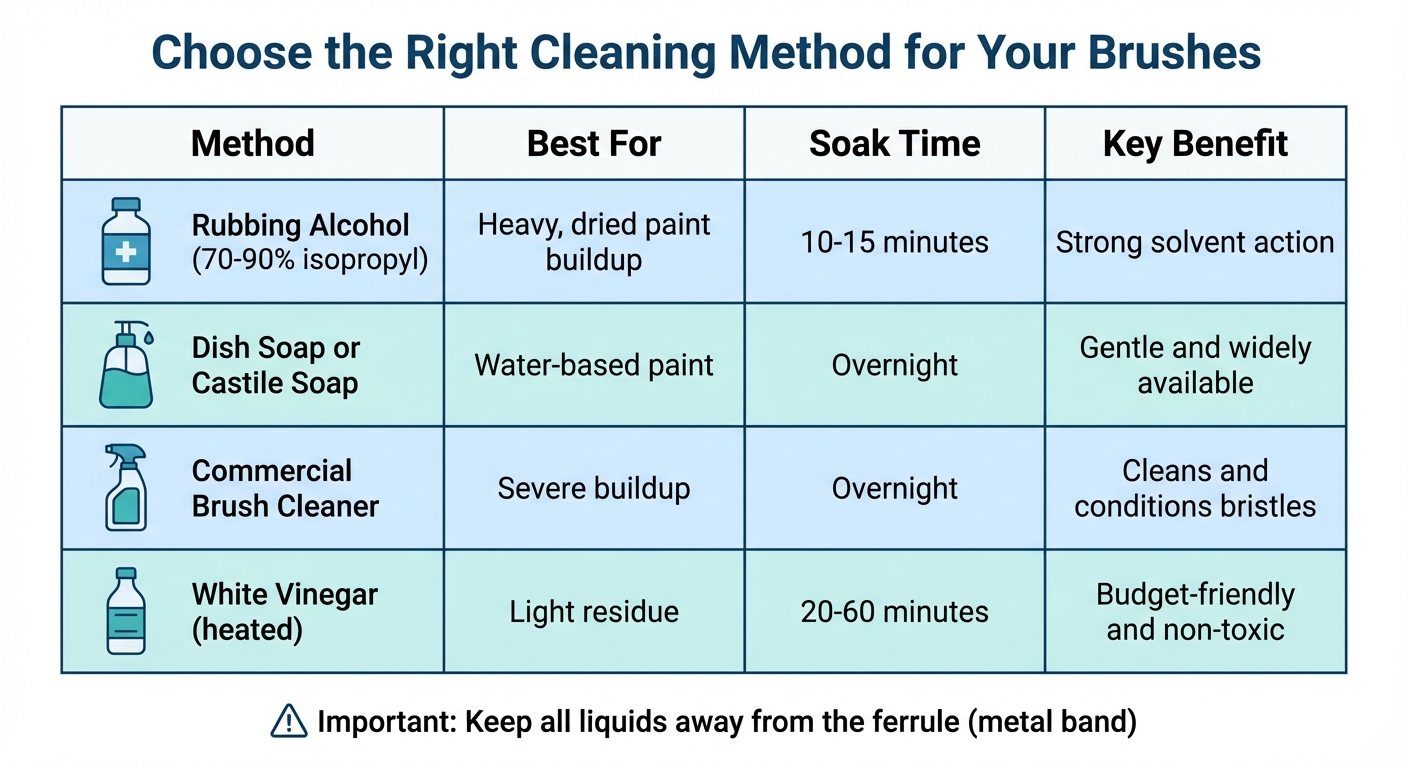
Acrylic Paint Brush Cleaning Methods Comparison Chart
Once you’ve gathered your materials, it’s time to tackle the dried paint on your brushes. The approach you take depends on how much paint is stuck in the bristles. For brushes with heavy, stubborn buildup, you might need a stronger solvent. For lighter residue, gentler methods often do the trick. These techniques work well alongside the preventive care tips mentioned earlier.
No matter which method you choose, keep liquids away from the ferrule - this helps maintain the brush’s structure and durability. Here’s how to approach different levels of paint buildup.
Rubbing Alcohol for Heavy Buildup
For brushes with thick, dried paint, 90% isopropyl alcohol is your best bet (though 70% works too). Pour enough alcohol into a glass jar to submerge the bristles completely, but be careful not to let the liquid reach the ferrule.
Suspend the brush so the bristles are free to soak for 10–15 minutes. Check periodically, and once the paint starts to soften, use your fingers or a brush comb to gently work it out. If the paint isn’t as stubborn, you can opt for a less intense cleaning method.
Dish Soap or Castile Soap for Gentle Cleaning
Wet the bristles with warm water, then massage a generous amount of dish soap or Castile soap into the brush. Focus on the heel of the brush, where bristles meet the ferrule, as this area tends to trap the most paint. Use small, circular motions and light pressure to break down the dried acrylic paint.
For tougher residue, let the brush soak in a bowl of warm, soapy water overnight. This softens the paint and makes it easier to remove. If needed, repeat the process until the brush is clean.
Commercial Brush Cleaners for Heavy Residue
Commercial brush cleaners are specifically designed to handle dried acrylic paint while conditioning the bristles. Products like The Masters Brush Cleaner & Preserver or Winsor & Newton Brush Cleaner & Restorer are great options. Work the cleaner into the bristles, and for severe buildup, let the brush soak overnight. Again, ensure the liquid doesn’t touch the ferrule. These products not only clean but also help restore the brush’s original softness and shape.
Vinegar for Light Cleanup
If you’re dealing with light paint residue, white vinegar is an effective and eco-friendly option. Warm the vinegar (don’t let it boil) and pour it into a jar. Soak the bristles for 20 to 60 minutes, keeping the ferrule above the liquid. The mild acidity in vinegar dissolves paint bonds without the need for harsh chemicals.
After soaking, use your fingers or a comb to remove the softened paint. This method works well for routine maintenance and minor cleaning.
| Method | Best For | Soak Time | Key Benefit |
|---|---|---|---|
| Rubbing Alcohol | Heavy, dried paint | 10–15 minutes | Strong solvent action |
| Dish Soap | Water-based paint | Overnight | Gentle and widely available |
| Commercial Cleaner | Severe buildup | Overnight | Cleans and conditions bristles |
| Vinegar | Light residue | 20–60 minutes | Budget-friendly and non-toxic |
After cleaning, rinse the brush thoroughly with warm water. Follow up with mild soap or a brush conditioner to keep the bristles soft and flexible. Reshape the bristles before letting the brush dry. These methods will help restore your brushes and keep them in good condition for future use.
Rinsing, Drying, and Storing Your Brushes
How to Rinse and Reshape Brushes
Once you've finished cleaning your brush, rinse it under cool water with the bristles pointing downward. This technique ensures water and paint don’t get pushed into the handle, which could damage the brush over time. As painting expert Patrick Coye advises:
Keep the bristles down to preserve the brush's shape.
Pay special attention to the heel of the brush - the spot where the bristles meet the ferrule. Use your fingers or a brush comb to work out any stubborn paint stuck in this area. Keep rinsing until the water runs completely clear. Afterward, gently squeeze out any extra water and reshape the bristles while they’re still damp. This step is crucial for maintaining the brush’s tip, ensuring it stays ready for precise work. Once reshaped, move on to drying your brushes properly to maintain their quality.
Proper Drying and Storage Methods
Lay your brushes flat on a towel to dry, making sure the bristles hang slightly over the edge of a table. This allows for better airflow around the bristles. Avoid drying brushes with the bristles pointing upward, as gravity can pull water into the ferrule, loosening the glue and leading to shedding bristles. These drying steps are essential for extending the life of your brushes.
Once the brushes are completely dry, you can store them in one of two ways: either upright in a jar or container with the bristles facing up, or flat in a protective case. Always ensure they are fully dry before storing to avoid mold or mildew. If you find a synthetic brush has lost its shape, dip it briefly in boiling water (just one second) and then reshape it immediately. This quick fix can help restore its original form.
Caring for Paint by Numbers Online Brushes

Why Brush Quality Matters
When it comes to Paint by Numbers Online kits, the quality of your brushes plays a huge role in achieving clean, precise results. These kits come with fine-tipped brushes designed specifically for filling in those tiny, numbered sections with accuracy. But here’s the catch: if these brushes aren’t cared for properly, they can lose their precision. Paint buildup or bristles that start to splay make it nearly impossible to fill small areas neatly. Plus, skipping regular cleaning between color changes can lead to "muddy" colors that dull your artwork.
With proper care, these kit brushes can last anywhere from one to five years, depending on how often you paint. That means a little extra effort in maintenance goes a long way in keeping your brushes in top shape.
How to Extend the Life of Your Kit Brushes
The key to keeping your brushes in good condition? Clean them right after you finish painting. Acrylic paint dries fast, and once it hardens, it can ruin your brush in just a few hours.
For long-term care, consider applying a small amount of hair conditioner or a specialized brush preserver once a month. This helps keep the bristles soft and flexible, which is especially important for synthetic brushes that tend to dry out over time. If you notice the tip of a fine brush losing its shape, a quick dip (just 1–2 seconds) in boiling water can help restore its point.
Storage is equally important. Make sure your brushes are completely dry before putting them away to avoid mold. You can store them upright in a jar with the bristles facing up or lay them flat in a protective case - just ensure no moisture is left behind.
Immediate Brush Care Matters
Cleaning your brushes right after painting is a must. Acrylic paint dries fast and forms a stubborn, permanent layer if left unattended. As Patrick Coye points out, skipping this step can cause bristles to warp or lose their shape.
While methods like rubbing alcohol, vinegar, or specialized cleaners can rescue brushes with dried paint, these should be your last resort. Over time, harsh solvents can weaken the bristles. The best approach? Prevent issues in the first place. A simple rinse with lukewarm water and mild soap right after painting keeps your brushes in great shape for years. This habit is especially important for artists tackling intricate, detailed work.
For fans of Paint by Numbers Online, taking care of fine-tipped brushes is even more critical. Precision is key when filling in tiny, numbered sections, and clean, well-maintained brushes ensure sharp lines and prevent colors from blending unintentionally. This attention to detail can make your finished artwork stand out as polished and professional.
FAQs
Can I save a brush if paint dried in the ferrule?
Yes, it’s often possible to salvage a brush with dried paint in the ferrule, though success depends on how hardened the paint is. Soaking the brush in solutions like rubbing alcohol, a gentle soap, or a specialized brush cleaner can help break down and loosen the paint. That said, if the paint has been sitting and hardened for an extended period, restoring the brush might be much harder. The best way to avoid this issue? Clean your brushes thoroughly after each use.
Will rubbing alcohol damage synthetic or natural bristles?
Rubbing alcohol is typically safe to use on synthetic brushes, though it might alter their color slightly. However, it’s not recommended for natural bristle brushes, especially those made from animal hair like sable or hog. The alcohol can dry out the fibers, making them brittle and shortening their lifespan.
What’s the safest way to soak brushes without bending bristles?
To keep your brushes in good shape while soaking them, combine equal parts of brush cleaner and warm water. Let the brushes soak overnight - this helps soften dried acrylic paint without bending the bristles. Be careful not to use hot water, as it can harden the paint and harm the brush. After soaking, gently clean off any leftover paint with a rag or a toothbrush, taking care not to use too much pressure.
