

39 Easy Acrylic Painting Ideas Anyone Can Try at Home
- by Paint by number online
-

Acrylic painting is simple to start, affordable, and perfect for beginners. You don’t need prior experience - just a basic six-color set, a few brushes, and a canvas. This guide offers 39 easy projects to try, from painting everyday objects to nature-inspired themes and abstract designs. Acrylics dry quickly, clean up with soap and water, and work on surfaces like canvas, wood, or glass. Whether you’re painting flowers, landscapes, or experimenting with bold patterns, these ideas help you practice techniques while having fun. Start small, enjoy the process, and let your creativity flow!
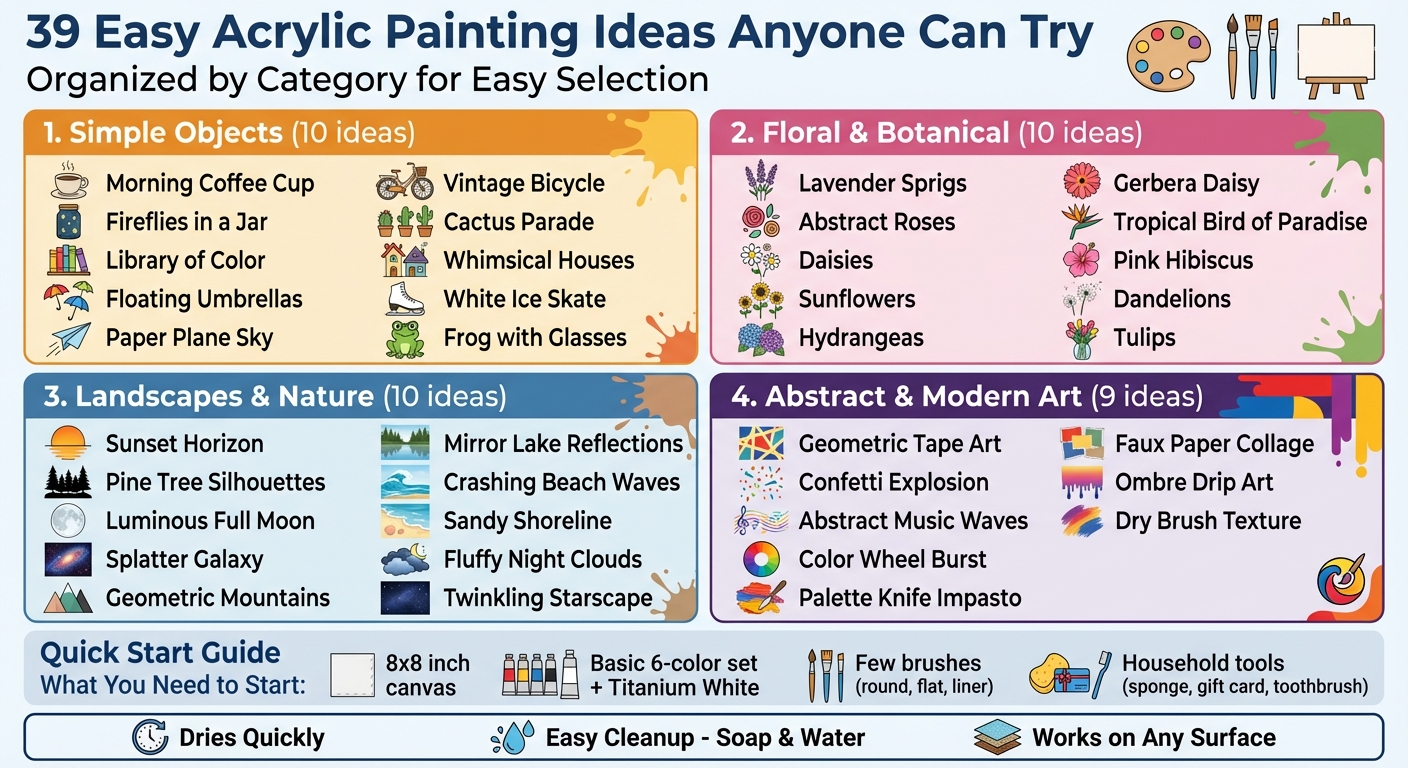
39 Easy Acrylic Painting Ideas for Beginners - Complete Visual Guide
So Easy! Unbelievable Acrylic Painting Ideas Anyone Can Do!
sbb-itb-68cf19f
1. Simple Objects
Starting with familiar objects is a great way to practice shape, color mixing, and brush control. These straightforward subjects allow you to focus on basic techniques without getting overwhelmed by intricate details.
One perfect beginner project is a Morning Coffee Cup - paint the silhouette of a ceramic mug, adding soft white and pale gray curls to represent steam rising from the cup. Another fun option is Fireflies in a Jar, where you can create a glowing effect by painting a mason jar filled with bright yellow dots against a dark background. For something colorful, try the Library of Color, painting vertical rectangles in various hues to resemble book spines lined up on a shelf.
If you’re in the mood for something playful, Floating Umbrellas lets you experiment with vibrant patterns by painting semi-circles against a cloudy backdrop. The Paper Plane Sky project is simpler but equally charming - paint a small white triangle (the paper plane) flying across a gradient sky. Or capture a rustic vibe with a Vintage Bicycle, painting its silhouette against a textured or solid-colored wall.
For plant enthusiasts, the Cactus Parade is a fun way to explore shapes by painting a series of green cacti in colorful pots, adding white dots or pink blossoms for extra character. Whimsical Houses invites creativity with rows of candy-colored buildings featuring mismatched windows and quirky chimneys. A White Ice Skate filled with greenery or festive berries makes a delightful seasonal piece, while a Frog with Glasses adds a touch of humor with its oversized spectacles.
These projects aren’t just about building skills - they also encourage you to let your creativity shine.
"Acrylic painting is one of the easiest and most forgiving ways to begin. It dries fast, cleans up with water, and lets you layer or cover up mistakes in minutes." - Jessie, Founder, IPaintYouSip.com
Get creative with household tools to add unique effects - a used gift card can create clean lines for rain, while a toothbrush makes it easy to splatter paint for starry skies. Don’t stress about perfection; embrace quirky, mismatched shapes to build confidence. These simple projects are the perfect foundation for tackling more advanced themes later on.
2. Floral and Botanical
Painting flowers is a fantastic way to ease into art. Even if your petals are uneven or your stems a bit off, the result often still carries a natural charm. Many floral designs are built on simple shapes like circles and swirls, making them perfect for building confidence with your brushwork. Here are some beginner-friendly floral ideas that focus on straightforward techniques:
- Lavender Sprigs: Create delicate stems with light, vertical purple and green strokes - no sketching required.
- Abstract Roses: Paint a central swirl surrounded by soft, curved shapes to mimic rose blooms.
- Daisies: Start with a yellow center, then add simple white petals, using a touch of blue to add subtle shading.
- Sunflowers: Experiment with blending as you layer bold yellow petals around a textured brown center.
- Hydrangeas: Form large, rounded clusters by painting tiny four-petal flowers grouped together.
If you're ready to go bolder, try a Gerbera Daisy that stretches across the entire canvas, giving you room to play with vibrant, layered colors. A Tropical Bird of Paradise offers a chance to work with angular shapes and striking orange and blue contrasts. For a softer look, a Pink Hibiscus lets you practice blending shades of pink in a more illustrative style. Dandelions, with their tiny seeds radiating from a central point, are great for mastering delicate strokes - use a circular guide to keep them consistent. Finally, Tulips are a fun way to practice overlapping shapes and capturing the unique, cup-like structure of their petals.
"Flowers are one of those low-effort, high-reward things to paint. You don't need to get every petal just right for them to turn out beautifully."
These floral exercises not only brighten your canvas but also help you build skills for tackling more intricate projects down the line. To add depth, start with darker shades for your petals and layer lighter tones on top to create highlights. Misting your canvas lightly can keep the paint workable, making blending much easier. Use a variety of brushes - round, flat, and liner - to handle different shapes and details, like stems and fine textures. For larger areas or backgrounds, try dry brushing to soften edges and create a more polished look.
3. Landscapes and Nature
Landscapes are a fantastic way to explore color and mood without stressing over perfect details. With their broad strokes and simple shapes, you can create peaceful, satisfying scenes without needing to focus on exact realism. Mountains can be uneven, and the overall effect still works beautifully. This makes landscapes a great choice for boosting your confidence with acrylics.
For instance, Sunset Horizon paintings let you practice blending vivid colors like purple and orange to create a glowing sky. Add a simple black tree line silhouette at the bottom for contrast. Another idea is Pine Tree Silhouettes, where you use downward strokes with small gaps to create a natural effect, allowing the background to peek through. Want something celestial? Try a Luminous Full Moon by dabbing beige and brown onto a deep indigo sky to mimic craters. Or, go bold with a Splatter Galaxy - flick diluted white paint to create a mist of stars.
If you’re into modern designs, Geometric Mountains offer a sleek look. Use painter’s tape to outline sharp triangular peaks, then fill them with muted tones for a minimalist vibe. For something reflective, Mirror Lake Reflections are a fun challenge. Simply invert your sky colors onto the lower half of the canvas, adding gentle horizontal streaks to suggest rippling water. Love texture? Experiment with a palette knife to create Crashing Beach Waves, applying thick white foam that catches the light beautifully.
For a serene shoreline, paint a Sandy Shoreline by blending warm beige sand into translucent green-blue water using horizontal strokes. Or create Fluffy Night Clouds with circular tapping motions, adding lighter highlights to mimic moonlight. Finally, a Twinkling Starscape is perfect for detail work - use a fine liner brush to paint tiny crosses across a dark sky, creating a sparkling night scene.
Pro tip: Keep a spray bottle nearby to lightly mist your canvas while blending gradients. This keeps your acrylics workable for longer and prevents harsh lines. And when using painter’s tape, brush outward from the edge and remove it while the paint is still slightly wet for clean lines.
4. Abstract and Modern Art
Abstract painting opens up a world where there are no strict rules - it's all about channeling emotion in your own way. As artist Jessie puts it, "Acrylic painting is all about discovery - the textures you like, the colors that speak to you, the shapes that feel right under your hand". Much like wandering through nature’s landscapes, abstract art invites you to experiment with bold techniques and vibrant colors. Using bright colors, simple methods, and tools you already have at home, you can dive into this creative process.
Take Geometric Tape Art, for example. With painter's tape, you can create sharp geometric shapes. Press the tape edges down firmly to avoid paint seeping underneath, then fill the shapes with bold, contrasting colors. For clean lines, peel the tape off while the paint is still slightly wet. If you’re in the mood for something playful, try Confetti Explosion - use a brush to scatter bright dots across a white canvas for a lively, celebratory vibe.
For a more intuitive approach, there’s Abstract Music Waves. Pick a song, and let the rhythm guide your brush - use sweeping strokes for calm melodies or sharp, dynamic bursts for upbeat tracks. If you want to focus on color, create a Color Wheel Burst. Start in the center and paint overlapping curved "petals" in every color, spiraling outward. To add texture, try Palette Knife Impasto, where you apply thick layers of paint with a palette knife to form raised, sculptural patterns that play beautifully with light.
If layered effects are more your style, experiment with Faux Paper Collage. Mimic torn paper by painting large color blocks and adding jagged white edges with a flat brush. For a modern touch, Ombre Drip Art creates a vertical gradient by thinning your paint and letting it drip naturally down the canvas. Or, for a raw, emotional feel, use Dry Brush Texture. With a dry, stiff brush and minimal paint, you can create scratchy strokes that reveal the texture of the canvas beneath.
One thing to steer clear of? Baking soda for texture. Artist Julie Prichard cautions, "Adding a load of baking soda to your art most certainly throws off that balance impacting the stability of the paint". Instead, stick to professional texture mediums or simple items like sponges and old gift cards for reliable, striking effects.
Conclusion
Acrylics provide an inviting and flexible way to dive into creativity from the comfort of your home. Whether you’re inspired by simple objects, vibrant florals, serene landscapes, or bold abstract patterns, acrylic paints make it easy to experiment. One of their standout features is how quickly they dry, allowing you to layer or fix mistakes effortlessly. As author Jane Hawkings wisely shares, "Starting with simple projects like abstract shapes, landscapes, and floral designs helps build confidence without the pressure of perfection". The projects mentioned above showcase just how adaptable acrylics can be for a variety of creative pursuits.
The key is to enjoy the process rather than obsess over a flawless result. Creative Event Organizer Jessie from IPaintYouSip.com sums it up beautifully: "Art isn't about getting it right but about letting yourself create". If you’re just starting out, grab an 8x8 inch canvas, a basic six-color set plus Titanium White, and a few household tools like sponges. Each brushstroke you make is a step in telling your personal story - there’s no wrong way to express yourself.
Acrylics also stand out for their vibrant colors that remain bright after drying. Plus, they can be used on nearly any surface - canvas, wood, stone, glass, or even fabric. This means there’s always something new to explore, making acrylics a perfect medium for endless creative possibilities.
FAQs
What are the must-have acrylic supplies for beginners?
Getting started with acrylic painting? Here's what you'll need to kick off your creative journey:
- Acrylic paints: Student-grade paints are a great budget-friendly option for beginners. They offer vibrant colors without breaking the bank.
- Brushes: Keep a variety of sizes on hand to create different textures and details. Flat and round brushes are especially versatile.
- Palette: A palette is essential for mixing colors. You can use a traditional wooden or plastic palette, or even a disposable paper one.
- Canvas or painting surface: Options like canvas panels, stretched canvas, or heavy paper work well for acrylics.
You might also consider optional tools like palette knives for mixing or applying paint and mediums to adjust the texture or drying time of your paints. And don’t forget the basics: water for thinning paint and cleaning your brushes, plus some cleaning supplies to keep your tools in good condition.
With these essentials, you’re all set to dive into the world of acrylic painting!
How do I blend acrylic paint before it dries?
To blend acrylic paint before it dries, aim for a creamy consistency by slightly thinning the paint with water. This helps create smoother transitions. Work swiftly using techniques like wet-on-wet blending, which takes advantage of the paint's wet state. If you need more time, try misting your palette with water, using a "Stay Wet" palette, or mixing in a slow-dry medium. Keeping a few dry brushes handy can also be useful for softening brushstrokes and achieving a seamless finish.
What surfaces can I paint with acrylics at home?
Acrylic painting opens up a world of possibilities when it comes to surfaces you can use at home. Popular choices include canvas, hardwood panels, acrylic paper, watercolor paper, ceramic, wood, and even glass. Just make sure the surface is clean and not too oily or overly slick, as that can make it harder for the paint to stick properly. These materials are easy to work with, especially for beginners, making them perfect for trying out new ideas and letting your creativity flow.
