

Top 5 Brushes for Fine Detailing in Paint by Numbers
- by Paint by number online
-

Paint-by-numbers projects thrive on precision, and the right brushes make all the difference. Whether you're painting eyelashes, flower petals, or tiny highlights, fine-tipped brushes ensure control and sharp results. Here's a quick rundown of the five best brushes for detailed work:
- Liner Brush: Ideal for sharp edges and thin lines, offering excellent control with sizes like 0, 00, and 000.
- Fine Detail Brush: Perfect for precise areas like flower petals or subtle highlights, with a compact, rounded tip.
- Round Pointed Brush: Versatile for both fine details and slightly larger sections, depending on pressure.
- Spotter Brush: Best for pinpoint accuracy in tiny areas, with short bristles for maximum control.
- Rigger Brush: Designed for smooth, uninterrupted lines like whiskers or thin branches.
Synthetic bristles (nylon or taklon) are the go-to for acrylic paints, as they hold their shape and resist damage. To keep your brushes in top shape, clean them immediately after use, reshape the bristles, and dry them flat or bristle-side down. Investing in proper tools and maintenance can transform your painting experience.
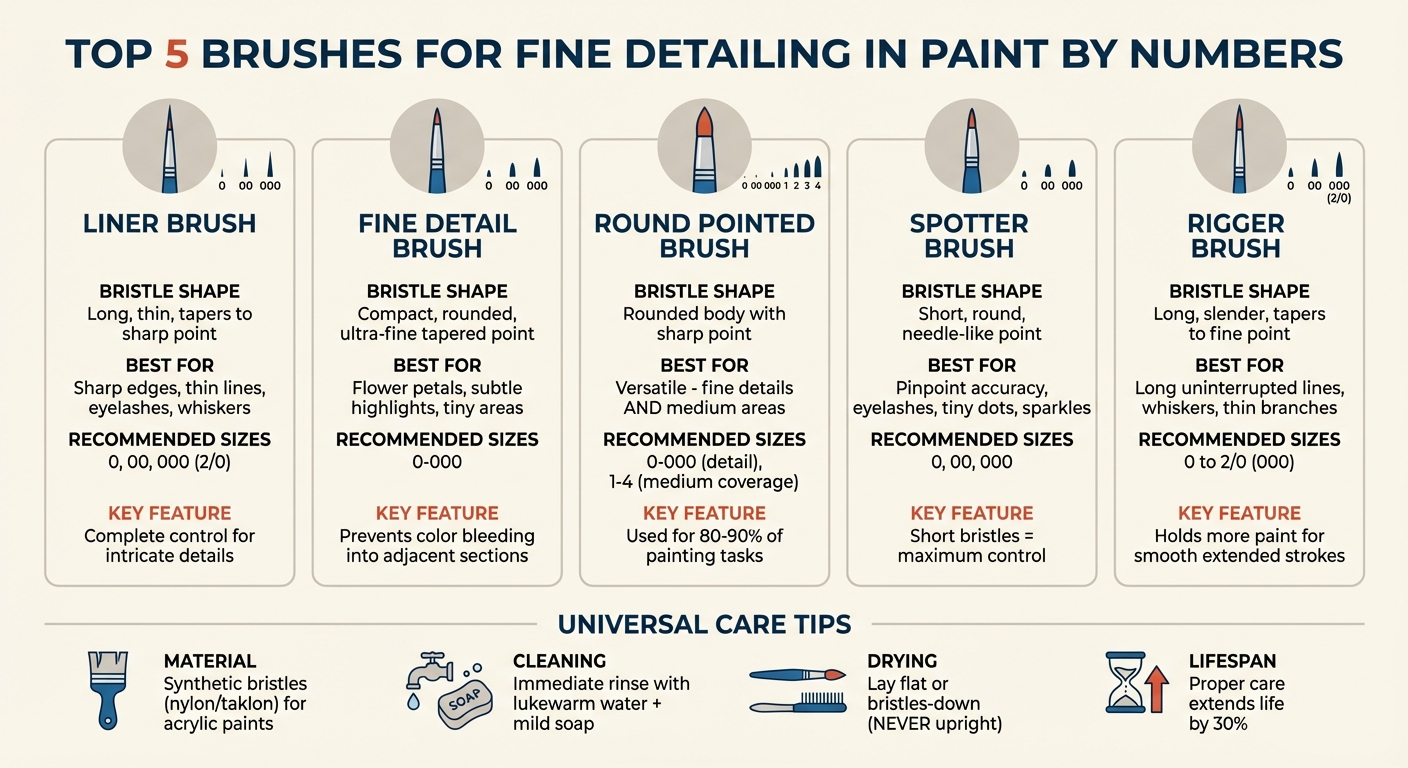
5 Best Brushes for Paint by Numbers Fine Detailing Comparison
1. Liner Brush
Precision for Intricate Details
When it comes to adding those tiny, intricate details to your artwork, the liner brush is an absolute must-have. Whether you're painting delicate eyelashes, fine whiskers, the sparkle in an eye, or intricate clothing patterns, this brush offers the precision you need. Its ultra-fine tip gives you complete control, ensuring your paint stays exactly where you want it, without spilling over into other areas.
Bristle Shape and Size
The liner brush is designed with a long, thin shape that tapers to a sharp point. This allows for smooth, delicate strokes while holding just enough paint to get the job done. Sizes like 0, 00, and 000 (also referred to as 2/0) are common for fine detail work, with smaller numbers corresponding to finer tips. For the tiniest details, a size 000 liner is your best bet.
Compatibility with Acrylic Paints
If you're working with acrylic paints, synthetic bristles - typically made from nylon or taklon - are the way to go. These bristles are stiffer and less absorbent than natural hair, making it easier to handle thick acrylic paint. Natural bristles, on the other hand, can become brittle or even snap when exposed to acrylic binders. Synthetic liners maintain their durability and shape, even when used with heavy-bodied paints.
Durability and Ease of Maintenance
A well-made synthetic liner brush can last a long time if cared for properly. After each use, rinse the brush immediately with lukewarm water and mild soap to prevent acrylic paint from drying on the bristles. Dried acrylic can form a hard, plastic-like coating that ruins the brush. Once clean, reshape the bristles with your fingers and lay the brush flat to dry. Avoid storing it upright in a jar, as water can seep into the ferrule (the metal part), weakening the glue and causing the bristles to shed.
The liner brush is all about precision and control, making it an essential tool for fine detail work. It’s the perfect starting point before exploring other specialized brushes to elevate your art.
sbb-itb-68cf19f
2. Fine Detail Brush
Precision for Intricate Details
The fine detail brush is your go-to tool for tackling the smallest, most delicate areas in your painting. Its small, rounded tip is perfect for creating sharp edges, fine details, and subtle highlights. Thanks to its tapered point, you can paint crisp lines without worrying about colors bleeding into adjacent sections. Whether you're working on flower petals, intricate patterns, or a subtle sparkle in an eye, this brush delivers unmatched precision.
Bristle Shape and Size
This brush is designed with a compact, rounded tip that tapers to an ultra-fine point. This shape gives you exceptional control, especially when working in tiny, detailed sections that demand accuracy. It's the ideal choice for those hard-to-reach spots that almost seem to vanish.
Compatibility with Acrylic Paints
Synthetic bristles are the best match for acrylic paints. They maintain their shape and precision, even with thicker paints. On the other hand, natural bristles tend to absorb water and lose their sharpness when used with acrylics. As Custom Paint By Numbers advises:
Using your delicate watercolor brushes with an acrylic paint-by-number kit is a recipe for disaster.
Durability and Ease of Maintenance
To keep your fine detail brush in top condition, clean it right after each use. Rinse it with lukewarm water and a drop of mild dish soap, gently working the soap into the bristles in your palm until the water runs clear. While the bristles are still damp, reshape them into a sharp point using your fingertips. Always dry your brushes flat on a paper towel or hang them bristle-side down. Never store them upright in a jar, as water can seep into the ferrule and weaken the glue. If the bristles start to splay, apply a small amount of conditioner, let it sit for a minute, rinse, and reshape.
When cared for properly, this brush becomes an essential tool for bringing out the fine details that elevate your paint-by-numbers project into a true masterpiece. Its precision and reliability will make it an invaluable part of your painting toolkit.
3. Round Pointed Brush
Precision for Intricate Details
The round pointed brush is an incredibly handy tool for paint-by-numbers projects. Its rounded body tapers into a sharp point, giving you the control to handle both delicate details and medium-sized areas with ease. By adjusting the pressure you apply, you can switch between using the fine tip for precise outlines and the broader base for filling larger sections, like petals or fruit shapes. This adaptability means you’ll likely rely on this brush for 80–90% of your painting tasks.
For crisp edges and fine details, hold the brush vertically and use only the tip with a light touch. When it’s time to cover slightly larger areas, press down a bit more to engage the wider part of the bristles. As Custom Paint By Numbers puts it:
A round brush has a soft, rounded body that tapers to a nice point, making it a true jack-of-all-trades. You can use that fine tip for crisp lines and getting into smaller, fiddly areas.
This brush is the perfect middle ground between precision work and broader strokes, making it a must-have in your painting arsenal.
Bristle Shape and Size
The tapered design offers versatility, providing a sharp tip for intricate lines and a broader base for medium-sized sections. Brushes in sizes 0–000 are ideal for fine details, while sizes 1–4 strike a balance between detail and coverage.
Compatibility with Acrylic Paints
Synthetic bristles are the best choice for working with acrylic paints, as they help maintain the brush’s sharp point even with thicker paint.
Durability and Ease of Maintenance
To keep your round pointed brush in top condition, clean it immediately after use with lukewarm water and mild soap. Reshape the tip while it’s still damp, and let it dry either flat or with the bristles pointing downward. If the tip starts to splay, apply a small amount of conditioner, let it sit briefly, rinse thoroughly, and reshape.
Up next, we’ll dive into brushes specifically designed for pinpoint accuracy in tiny, detailed areas.
4. Spotter Brush
Precision for Intricate Details
For those moments when your paint-by-numbers project demands the highest level of precision, the spotter brush is the tool you need. Its needle-like tip is perfect for painting the smallest details, like eyelashes, the sparkle in an eye, or tiny birds in the distance [4, 14]. What sets the spotter apart from standard round brushes is its shorter bristles, which give you better control for creating fine lines and tiny dots [13, 14]. The fine tip allows you to reach even the most minuscule numbered sections on your canvas without smudging outside the lines [3, 4]. To achieve the sharpest results, hold the brush upright - similar to how you’d hold a pencil - and use only the very tip of the bristles. Dip just the tip into the paint and wipe off any excess on the rim to avoid overloading.
Bristle Shape and Size
Spotter brushes are typically available in sizes #0, 00, and 000, with smaller numbers corresponding to finer tips [4, 13]. Their short, round bristles taper into a sharp point, giving you the precision needed for intricate details like facial features or delicate patterns [13, 14]. This compact design ensures that every stroke lands exactly where you want it, making it indispensable for detailed work.
Compatibility with Acrylic Paints
When using acrylic paints, synthetic bristles - often made from nylon or taklon - are the best option for spotter brushes [3, 4]. These materials are stiffer and less absorbent, allowing the paint to glide smoothly onto the canvas without soaking into the bristles. As Custom Paint By Numbers explains, synthetic brushes provide "the resilience, control, and easy maintenance needed to create a clean, professional-looking piece of art without the fuss".
Durability and Ease of Maintenance
To keep your spotter brush in top condition, clean it immediately after use with lukewarm water and mild soap. Reshape the bristles while they’re still damp, and let the brush dry flat. If the bristles start to split, you can work a small amount of hair conditioner into the damp bristles, leave it for a minute, and then rinse thoroughly to help restore their shape.
Next up: The rigger brush, your key to mastering smooth, flowing lines.
5. Rigger Brush
Precision for Intricate Details
The rigger brush is the perfect tool for crafting long, uninterrupted lines with precision and control. Its long, slender bristles taper to a fine point, making it ideal for adding intricate details like whiskers or thin branches. Unlike shorter detail brushes, the rigger holds more paint, so you can create smooth, extended strokes without constantly reloading. For the best results, hold the brush vertically, like a pen, and use only the tip. To steady your hand, try bracing it while painting.
Bristle Shape and Size
Rigger brushes are designed to excel in precision work. They typically come in sizes from 0 to 2/0 (or even smaller, like 000), with lower numbers indicating finer tips. The thin, tapered bristles allow for exceptional accuracy, even in tight spaces. You can also adjust the thickness of your lines by varying the pressure you apply - light pressure results in delicate strokes, while firmer pressure creates bolder, more textured lines. Thanks to its ability to hold more paint, the rigger brush ensures smooth, uninterrupted strokes.
Compatibility with Acrylic Paints
The rigger brush’s unique design works best with materials that preserve its fine shape. Synthetic fibers are commonly used for these brushes because they provide the stiffness needed for smooth, extended strokes without becoming floppy or overly absorbent, as natural bristles might. These synthetic fibers also ensure that paint flows easily off the brush’s tip, rather than soaking into the bristles, making them particularly well-suited for acrylic paints.
Durability and Ease of Maintenance
Proper care is essential to keep your rigger brush in top condition. Acrylic paint dries quickly into a hard, plastic-like film that can ruin the fine bristles, so clean the brush immediately after use. Use lukewarm water and mild soap to rinse out the paint, then gently reshape the bristles to maintain their sharp point. Avoid standing the brush upright to dry, as water can seep into the ferrule and weaken the glue holding the bristles. Instead, lay the brush flat on a towel to dry completely.
How to Choose and Care for Detailing Brushes
Selecting the Right Brush
When working with acrylics, the bristle material makes all the difference. Synthetic options like nylon or taklon are ideal because they resist waterlogging, hold their shape, and maintain the stiffness needed for precision work. For brush sizes, tiny numbered cells require brushes like 0, 00, 000, or 2/0, while sizes 2 to 4 are better suited for standard sections. Larger areas, like backgrounds, call for sizes 6 to 8. The shape of the brush also matters: liner and detail round brushes excel at creating crisp lines and fine details, while round brushes are more versatile for medium-sized sections. Once you've selected the perfect brush, proper care will ensure it performs well over time.
Immediate Cleaning Is Essential
Acrylic paint dries quickly - within 3 to 8 minutes - and becomes almost impossible to remove once hardened. To avoid this, rinse your brush immediately after finishing with a color. Hold the brush downward while rinsing to keep water from seeping into the ferrule (the metal band that holds the bristles). Using a two-bucket method is a great way to ensure thorough cleaning: one bucket for the initial rinse and another with clean water for a final pass.
Proper Washing and Reshaping
After the initial rinse, follow these steps to keep your brushes in top shape:
- Add a drop of mild dish soap or baby shampoo to your palm and gently swirl the brush to create a light lather.
- Massage the soap into the bristles near the ferrule to loosen any paint residue.
- Rinse under lukewarm water until the water runs clear.
- Before the brush dries, reshape the bristles using your thumb and forefinger to restore their original point or edge.
"A well-maintained brush is a painter's best friend. Spending just two minutes on cleaning after each session will dramatically extend the life of your tools." - Custom Paint By Numbers
Drying and Storage
Proper drying and storage are just as important as cleaning. Never dry brushes upright in a jar, as water can seep into the ferrule, weakening the glue and causing bristles to fall out. Instead, lay your brushes flat on a lint-free towel or hang them bristles-down to allow moisture to drain away from the ferrule. Once completely dry, store them in a dust-free holder to protect the delicate tips. Neglecting these steps can shorten a brush's lifespan by up to 30%.
Taking just a little extra care with your brushes will ensure they stay precise and reliable for your detailing work.
PBN Tutorial | Painting Tiny Details Openings in Paint by Numbers Mini Brush Set Tutorial Tuesday
Conclusion
The brushes you choose have a direct impact on how polished your finished painting looks. Using high-quality tools can mean the difference between sharp, professional edges and frustrating paint bleeds that can disrupt the relaxing flow of your project. When working on tiny, intricate areas that demand precision, the right detailing brush can make the entire process much smoother.
Paint by Numbers Online kits come equipped with fine-tipped brushes tailored for precision work, giving you a dependable starting point for any project. These synthetic brushes are designed to handle thick acrylic paints effectively, offering the control needed for most standard sections. For beginners, they’re more than capable of delivering impressive results.
However, if you're aiming for even greater precision, especially in areas like facial features or delicate patterns, upgrading to specialized brushes is worth considering. This small investment can make a noticeable difference. Specialized detailing brushes provide near-surgical accuracy, and with proper care, they’ll last through multiple projects. In contrast, standard kit brushes may lose their shape after heavy use. The right tools, combined with good maintenance habits, can elevate your painting experience and results.
Each type of brush, from liners to riggers, plays a specific role in achieving the precision that sets apart exceptional paint-by-numbers artwork. As Custom Paint By Numbers explains:
"Upgrading your brushes isn't about trying to become a professional artist overnight. It's about removing the frustration and giving yourself the right tools to fully enjoy the calming, meditative process of painting by numbers."
Whether you stick with the brushes included in your kit or add a few specialized options, don’t overlook the importance of proper care. Refer to the care tips above for advice on cleaning and storage - simple habits like these will keep even basic brushes in good shape for months.
FAQs
Which brush should I use for tiny facial features?
For tiny facial features, consider using an extra-fine detail brush made from weasel hair. These brushes provide excellent precision and control, making them perfect for adding clean, delicate details effortlessly.
How do I stop acrylic paint from drying on my brush?
To keep acrylic paint from drying on your brush while working on paint-by-numbers projects, make it a habit to clean your brushes often with water. This helps keep the bristles moist and prevents the paint from hardening. If you’re stepping away for a break, rinse the brush thoroughly, reshape the bristles gently, and either store it in a damp environment or leave it in water. Since acrylic paint dries fast, it’s crucial to clean your brushes right after use to avoid buildup and keep them flexible.
What brush sizes should I use for small and large sections?
For detailed work on small sections, use ultra-fine brushes like #5/0 or smaller to achieve precision. For broader areas, choose #3 or medium-sized brushes to cover space more efficiently without sacrificing accuracy.
