

Paint by Numbers Supplies Checklist for Beginners
- by Paint by number online
-

Want to start paint by numbers but not sure what you need? Here's a quick guide to get you started:
- Basic Kit Supplies: Pre-printed canvas (rolled or pre-stretched), numbered acrylic paint pots, and three brushes (small, medium, large).
- Workspace Setup: Flatten rolled canvases, take a reference photo, and organize paints to avoid spills.
- Brush Care: Clean brushes immediately, avoid dried paint, and use mild soap for cleaning.
- Optional Upgrades: Tabletop easels ($18.95–$21.95), daylight lamps, and magnifying tools for precision.
- Workspace Protection: Cover surfaces with plastic or newspaper, use two water jars (rinsing and thinning), and keep paper towels handy.
- Finishing Touches: Seal your art with acrylic varnish for protection, and frame it for display.
Pro Tip: Keep extra paints, brushes, and correction tools (like toothpicks or white acrylic) ready. These small steps ensure a smooth painting experience.
Ready to dive in? Let’s set up your supplies and start creating your masterpiece!
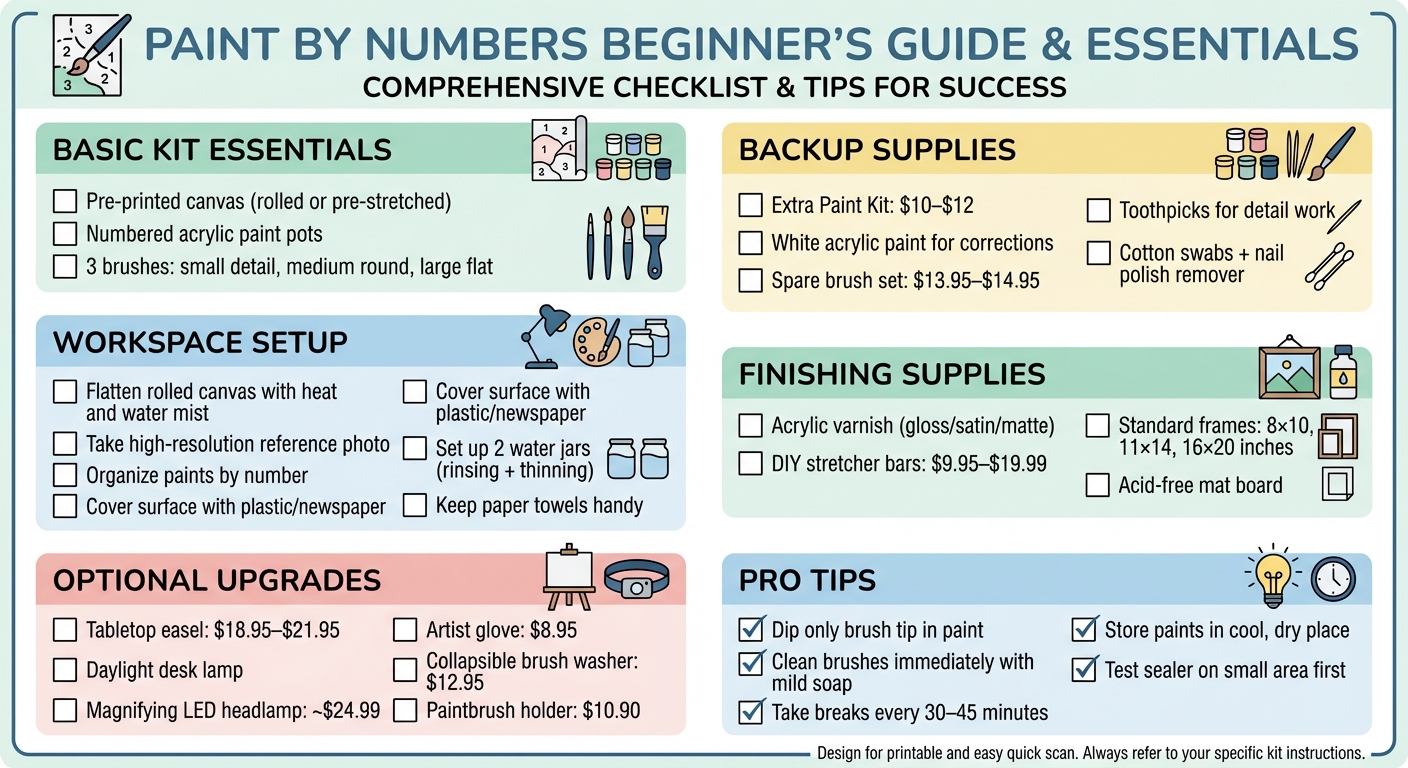
Complete Paint by Numbers Supplies Checklist for Beginners
What's Included in a Paint by Numbers Kit
Pre-Printed Canvas and Workspace Setup
Every paint by numbers kit comes with a pre-printed canvas that features numbered sections, along with a reference sheet. These canvases are available in two formats: rolled or pre-stretched. Rolled canvases are more budget-friendly and easier to ship, but they’ll need to be flattened before you start painting. On the other hand, pre-stretched canvases are ready to go right out of the box. For beginners, starting with a smaller size like 8×10 or 9×12 inches is often a good idea - it keeps the project more manageable.
If you’re working with a rolled canvas, unroll it and flatten it out. You can use a little heat and a light mist of water to help smooth it out, then tape it securely to a flat surface. Before you begin painting, take a high-resolution photo of the blank canvas with your smartphone. This snapshot will act as a permanent reference, especially if any of the tiny numbers get covered up during the painting process.
"Take a digital picture of your canvas with your phone! This will give you a permanent reference sheet that you can never misplace, spill paint on, or tear!" - Support Staff, My Paint by Numbers
Once your canvas is ready, organize your acrylic paints and set up your workspace for an efficient and enjoyable painting session.
Acrylic Paints and Paint Storage
The kit includes water-based, non-toxic acrylic paints, each in a numbered pot that matches the corresponding sections on your canvas. These paints are quick-drying and beginner-friendly - over 70% of first-time painters prefer acrylics because of their forgiving nature. Keep in mind, though, that acrylic paints tend to dry slightly darker than they appear when wet.
To keep your paints in good condition, open one pot at a time and close the lid as soon as you’re done using it. If the paint thickens, just add a drop or two of warm water to restore its smooth texture. Use separate water containers - one for rinsing brushes and another for thinning paint. Store your paint pots in a cool, dry place away from direct sunlight, and have some paper towels handy for cleaning brushes and wiping up any messes.
With paints organized, you’re ready to focus on the tools that will bring your artwork to life: the brushes.
Brush Set Basics
Most kits come with three essential brushes: a small detail brush, a medium round brush, and a large flat brush. Each one is designed to help you tackle different areas of the canvas with precision and ease.
For the best results, dip only the tip of your brush into the paint. This method saves paint and keeps the bristles near the handle from drying out. Avoid letting paint dry on your brushes - it hardens into a plastic-like substance that’s nearly impossible to remove. To prevent this, rest unused brushes in water while you work, and clean them thoroughly with mild soap and lukewarm water after each session.
With your canvas prepped, paints ready, and brushes in hand, you’re all set to dive into your painting adventure!
sbb-itb-68cf19f
Learn Paint By Numbers In 6 Easy Steps 🎨Painting By Numbers Beginner's Guide No Experience Needed
Accessories for Better Comfort and Accuracy
While your basic kit gets you started, adding a few well-chosen accessories can make your painting sessions more comfortable and precise. These extras elevate your setup, making the entire experience smoother and more enjoyable.
Easels, Lighting, and Magnification Tools
Tabletop easels, priced between $18.95 and $21.95, are a simple yet effective upgrade. They save space, sit conveniently on your desk, and provide an ergonomic angle for painting. If you're working with an unframed canvas, secure it to a piece of foam board or sturdy cardboard using tape or clips for added stability.
"Switching between painting on a flat surface and a tabletop easel usually helps [reduce strain]!" - Support Staff, My Paint by Numbers
Proper lighting is essential for catching small details. A daylight desk lamp minimizes glare, ensuring you can focus on intricate areas. For even greater precision, consider a magnifying LED headlamp (around $24.99), which keeps your hands free while providing bright, focused light. Alternatively, take a high-resolution photo of your blank canvas and zoom in on your smartphone - this modern twist works like a digital magnifying glass.
Workspace Protection and Organization Tools
To protect your workspace, cover your table or desk with old newspapers or a plastic sheet - acrylic paint can be notoriously stubborn to clean. Make sure your canvas is securely backed, as mentioned earlier, to prevent movement while you work.
Keeping your tools organized can save time and reduce frustration. Use a two-jar water system: one jar for rinsing brushes and another with clean water for thinning paints. A paintbrush holder (around $10.90) ensures your brushes are always within reach, while small trays can neatly store your numbered paint pots. Keep paper towels nearby for quick cleanups and accidental spills.
Comfort Items and Break Reminders
Comfort is key to an enjoyable painting session. Choose a supportive chair and switch up your painting position occasionally to avoid strain. Set a timer for every 30–45 minutes to remind yourself to take short breaks. Stepping away for a few minutes can help you maintain focus and keep the experience relaxing.
Finishing and Displaying Your Painting
Drying, Sealing, and Protection Methods
Before sealing your painting, let it dry completely to avoid smudges or uneven finishes. Acrylic paints dry relatively fast, but patience is key to ensure the artwork is fully dry before moving on.
Sealing your painting provides a protective layer that shields it from dust, moisture, UV rays, and those inevitable accidental fingerprints or spills. One of the easiest ways to do this is by using an acrylic varnish, which comes in gloss, satin, or matte finishes. If you're working on a larger canvas or a piece with intricate details, spray varnish is a great option as it delivers an even coat with minimal effort. For those on a budget, Mod Podge is a versatile alternative that can be applied with a brush or sponge.
Before sealing, give your canvas a quick wipe with a lint-free cloth to remove any dust. Apply the sealer in a well-ventilated space, using several thin, even coats. Make sure each coat dries completely - this can take anywhere from a few hours to a few days. To avoid surprises, test the sealer on a small, inconspicuous area first. Once sealed, your painting is ready to shine, and adding a quality frame or mounting method can take its presentation to the next level.
Framing and Display Options
With your painting sealed, it’s time to think about how to showcase it. Framing is a classic way to give your artwork a polished, professional appearance. If you’re feeling crafty, DIY stretcher bars are an affordable option, typically costing between $9.95 and $19.99 depending on the size. For a more traditional frame, standard sizes like 8×10, 11×14, and 16×20 inches are easy to find and readily available in the U.S.. Using acid-free mat board not only highlights your artwork but also protects the edges from wear and tear.
"A beautifully framed print is a piece of fine art, a poorly framed print is… a poor piece of art." - Noelle Phares, Artist
If you’re looking for a lightweight and hole-free way to display your work, try double-sided tape, glue dots, or reusable adhesive tabs to mount your canvas directly on the wall. To keep your painting in its best condition, hang it at eye level in a bright but shaded area to minimize UV exposure and fading. Steer clear of places with high humidity or temperature swings - your artwork will thank you in the long run.
Extra Supplies and Backup Items
Backup Paints, Brushes, and Correction Tools
Interrupted painting sessions can be frustrating, so it’s smart to have backup supplies ready. Many suppliers offer Extra Paint Kits or Paint Sets priced around $10–$12, which include additional quantities of the specific colors used in your project. For even more flexibility, keep a set of primary colors - red, blue, and yellow - on hand. This way, you can mix and match to recreate shades if you run out of a particular color. These simple precautions help you maintain a seamless painting experience.
White acrylic paint is another essential for beginners. It’s perfect for covering numbers in light-colored sections before painting or correcting dried mistakes. If you don’t have white acrylic paint, white-out or white colored pencils can also do the trick. Got paint that’s too thick? Add a drop or two of warm water or a flow improver (at a 1:20 ratio) to bring it back to life.
For those tiny, hard-to-reach spaces, toothpicks work wonders, offering precision that even the smallest brushes can’t match. Cotton swabs paired with nail polish remover are also handy for cleaning up smudges or fixing small errors. It’s a good idea to keep a spare set of synthetic brushes in various sizes. Consider detail brushes (size 0 to 2/0), medium round brushes (size 2 to 4), and large flat brushes (size 6 to 8) to handle every part of your canvas. Universal brush sets typically cost between $13.95 and $14.95.
Advanced Tools for Regular Painters
If painting is more than an occasional hobby for you, investing in advanced tools can make a big difference. An artist glove (around $8.95) is a game-changer, keeping your canvas clean by preventing smudges caused by skin oils - especially helpful when working on intricate details. Another great addition is a collapsible brush washer ($12.95), which simplifies cleanup and keeps your workspace organized during those frequent color changes.
For tackling high-detail work, tools like a magnifying glass with LED (priced between $12.95 and $13.90) or a magnifying headlamp can be lifesavers. They provide enhanced clarity and lighting, making it easier to focus on those tiny numbered areas. These tools are especially useful if you’re painting in the evening or in dimly lit spaces. With these upgrades, you can turn minor frustrations into a smoother, more enjoyable creative process.
Conclusion
Preparation is the foundation of a stress-free and enjoyable painting experience. Having the right tools and supplies on hand is not just a matter of convenience - it’s the key to setting yourself up for success. As Paint-by-number.com wisely notes, "Success in the beginning has less to do with fancy techniques and more to do with having the right basic tools at your fingertips". When you’re fully equipped, you can immerse yourself in the creative process without the distraction of searching for missing items.
Simple actions, like ironing your canvas, taking a quick digital reference photo, and sealing your paint pots, can make a world of difference. These small but important steps help you avoid wasting materials and protect your investment in supplies. For instance, dried acrylic paint on brush bristles can harden into plastic, effectively ruining your brushes.
Keeping your supplies organized doesn’t just save time - it enhances the therapeutic aspect of painting. As Painting By Numbers Shop puts it, "Using the best paint tools for your paint by numbers project is important for creating beautiful works of art... Good tools ensure better results and a more enjoyable painting experience". With everything neatly arranged and within reach, you can easily tap into that calming flow state where creativity thrives and stress fades away.
Your masterpiece is waiting. Use this checklist to gather your essentials and start your painting adventure with confidence!
FAQs
What basic supplies do I need to start painting by numbers?
To kick off your paint-by-numbers adventure, you'll need a pre-printed canvas, a collection of pre-mixed paint pots, and a selection of paintbrushes in various sizes. Most beginner kits come with all of these included, so you’ll have everything you need to get started.
If you want to make your experience even smoother, you might also grab a few extras. A small tabletop easel can help keep your canvas steady, while sealant is great for protecting your completed masterpiece. Don’t forget a cup of water and some paper towels to rinse and dry your brushes as you go. With these supplies on hand, you’re all set to dive into this relaxing and enjoyable pastime!
What’s the best way to care for my paintbrushes so they last longer?
To keep your paintbrushes in good shape and make them last longer, try these easy tips:
- Rinse right after painting: As soon as you're done, hold your brushes under lukewarm water to wash off any leftover acrylic paint before it has a chance to dry.
- Clean with mild soap: Add a small drop of dish soap or a brush cleaner to the bristles, working it in gently. Rinse thoroughly until the water runs clear.
- Dry and reshape: Use a clean cloth or paper towel to pat the bristles dry, then reshape the tip with your fingers. Be gentle to avoid damaging the bristles.
- Store the right way: Place your brushes upright in a holder or lay them flat with the bristles protected. Never leave them sitting in water.
Taking these steps will help protect your brushes, making your painting experience smoother and more enjoyable for years to come!
What extra tools can make painting by numbers easier and more enjoyable?
Enhancing your paint-by-numbers experience can be a breeze with a few handy tools. Detail brushes in different sizes are a game-changer, whether you're working on intricate areas with a fine tip or covering larger sections like backgrounds. They not only boost precision but also help ease hand fatigue during longer painting sessions. Pair that with a magnifying tool, such as a handheld magnifier or a headlamp with LED lights, and you'll find it much easier to tackle those tiny numbers and intricate details without straining your eyes.
An adjustable easel - whether a tabletop or standing version - can make a big difference by positioning your canvas at a comfortable angle. It keeps your hands free and your workspace organized. When your masterpiece is complete, applying a sealer or varnish can help preserve your artwork while making the colors pop. For mixing colors, having a paint palette or a small mixing tray is incredibly useful. Lastly, a basic brush-cleaning setup - just soap, water, and a drying rack - ensures your brushes stay in great condition for your next project. While these tools aren't must-haves, they can definitely make your painting journey smoother and more enjoyable!
