

Checklist for Stress-Free Paint by Numbers Setup
- by Paint by number online
-

Creating a relaxing paint-by-numbers setup is simple with the right steps. Here's how to get started:
- Workspace: Choose a well-lit, comfortable spot with proper posture support. Protect your surfaces with newspaper or a plastic cover, and keep tools within easy reach.
- Materials: Unpack your kit, check for missing or damaged items, and prep your canvas by flattening it. Use an easel or secure the canvas to a flat surface for stability.
- Tools: Organize paints in numerical order, keep brushes clean, and have water and paper towels nearby.
- Mindset: Wear old clothes, set aside focused painting time, and take regular breaks to stay refreshed.
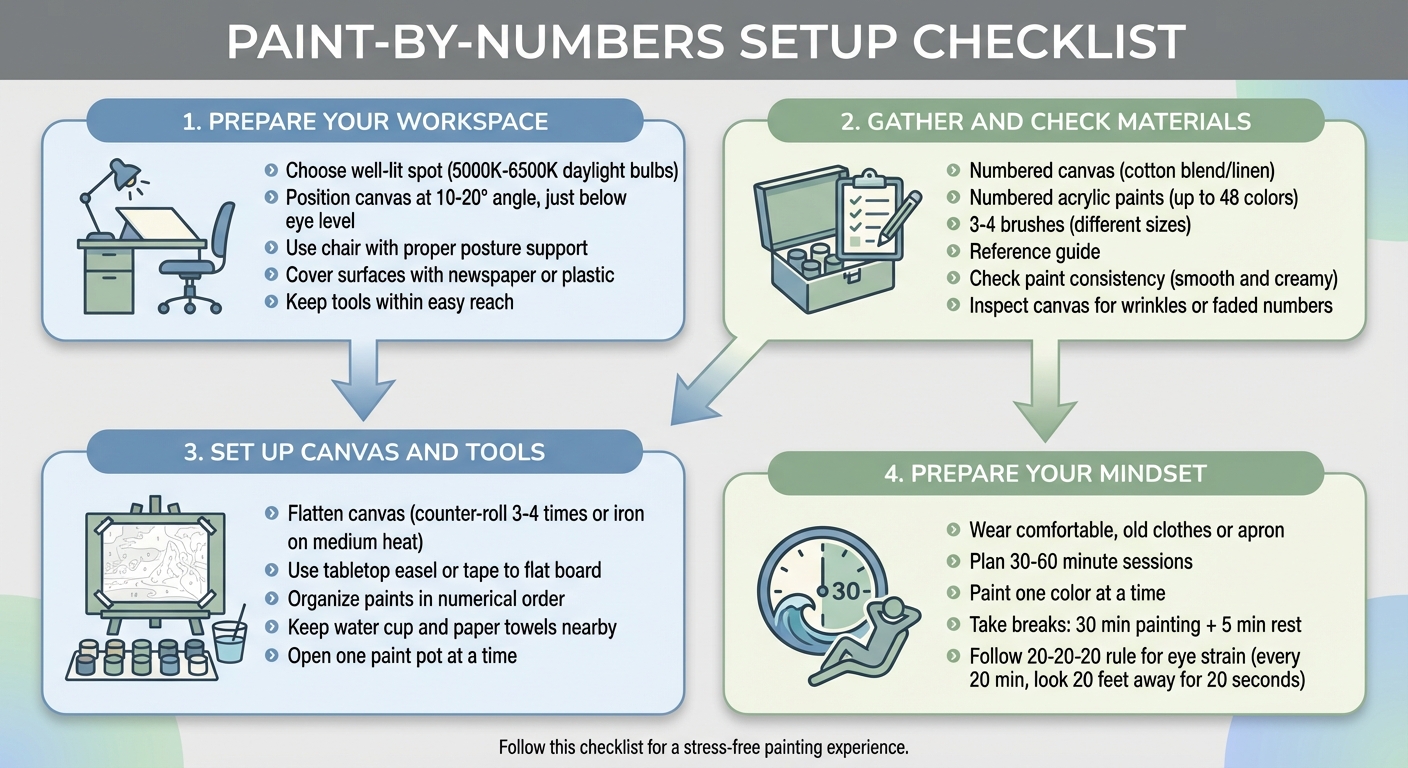
Paint by Numbers Setup Checklist: 4-Step Guide for Stress-Free Painting
Paint-by-Number Tutorial 1 - Preparing your workspace
sbb-itb-68cf19f
Prepare Your Workspace
Getting your workspace ready isn’t just about convenience - it sets the tone for a smooth and enjoyable painting session.
Pick a Well-Lit, Comfortable Spot
Good lighting is key for accurate colors and reducing strain on your eyes. Natural light works best, especially indirect sunlight from late morning to early afternoon. It provides even illumination without creating harsh shadows or glare. If you’re painting in the evening or don’t have access to natural light, use daylight-balanced bulbs (5000K–6500K). These bulbs ensure colors appear true to life and help reduce eye fatigue. Position your light source above or beside your non-dominant hand to avoid casting shadows on your work.
Comfort matters too. Choose a chair that promotes good posture, with your feet flat on the floor and your hips slightly elevated. Your canvas should be just below eye level and tilted at a 10–20° angle. This setup helps prevent neck strain and minimizes glare.
Once your lighting and seating are sorted, it’s time to protect your workspace.
Protect Your Surfaces
Acrylic paints dry quickly and permanently, so taking steps to protect your surfaces is a must. Cover your table or desk with newspaper or a plastic tablecloth to catch any spills. Use masking tape to secure your canvas in place, which prevents sliding and smudging. For added protection, consider using a white non-glare mat - it not only shields your work area but also reflects light to brighten your space. Keep paper towels and a cup of clean water within reach to quickly clean up any drips.
With your surfaces protected, focus on organizing your tools for easy access.
Clear and Organize Your Space
A clutter-free workspace helps you stay focused. Use a sturdy, stable surface and arrange your materials - canvas, paints, brushes, water cup, and paper towels - so they’re within easy reach. Place these essentials on your dominant side to minimize unnecessary reaching and reduce fatigue. If your project involves intricate details, having a magnifying glass nearby can make a big difference in precision.
An organized and tidy space not only keeps distractions at bay but also makes your painting session more enjoyable.
Gather and Check Your Materials
Once your workspace is all set, it’s time to make sure you’ve got everything you need - and that it’s in good shape. Taking a few minutes to unpack and inspect your materials now can save you a lot of hassle later. A quick check ensures you’re ready to dive into painting without interruptions.
Unpack Your Paint by Numbers Online Kit

Your kit should include the essentials: a numbered canvas (usually made of a cotton blend or linen), a set of numbered acrylic paints, three to four brushes in different sizes, and a reference guide that shows the completed design. Some kits even come with hanging hardware, like screws and hooks, so you can proudly display your finished artwork.
The paints in these kits are water-based, non-toxic, and sealed to keep them fresh. Beginner kits often feature fewer colors and larger sections, making them easier to work with. On the other hand, advanced kits can include up to 48 colors, allowing for more intricate details and realism. For added peace of mind, take a high-resolution photo of your blank canvas as a backup reference.
Check for Missing or Damaged Items
Now’s the time to make sure everything is in tip-top shape. Open each paint pot and check the consistency. Acrylic paint should feel smooth and creamy. If you find a pot that’s dried out or has developed a skin, use a toothpick to pierce it, then add a drop or two of warm water and stir until it’s smooth again. Also, double-check that all numbered paint pots match the numbers on your canvas to confirm nothing’s missing.
Inspect the canvas for any wrinkles or faded numbers. If you spot creases, gently iron the back of the canvas on low heat, using a clean cotton cloth as a barrier between the iron and the fabric. For your brushes, check for stray bristles or stiffness. If the bristles feel rigid, soak them in warm water for a few minutes to bring back their flexibility. Synthetic bristles generally work best with acrylic paints because they hold their shape well.
Set Up Your Canvas and Tools
Getting your canvas and tools ready is the first step to an enjoyable painting session. A well-organized workspace ensures you can dive into the creative process without interruptions or the frustration of misplaced supplies. Let’s set the stage for your artistic journey.
Flatten Your Canvas
If your canvas arrived rolled, it’s likely to have some creases or curls that need smoothing out. Start by counter-rolling it 3–4 times to loosen the folds. For more persistent wrinkles, place the canvas face down, lightly mist the back with water, and use an iron set to a medium heat setting (like silk, wool, or polyester). Glide the iron gently over the canvas without applying too much pressure to avoid damaging the printed numbers. Prefer a heat-free method? Simply place heavy books on the canvas overnight for a similar effect.
"To straighten your paint by numbers canvas, you need to use a bit of water to mist the back of the canvas, set the iron to mid-range heat, and gently move it over the surface of the canvas." - Paint Your Numbers
Use a Frame or Easel (Optional)
Painting on a flat surface for too long can lead to neck and back discomfort. Using a tabletop easel can solve this by tilting your canvas to eye level, which not only improves posture but also helps maintain accurate proportions and reduces wrist strain. If you’re planning to stretch your canvas onto a wooden frame, do so before you start painting to ensure proper tension. For beginners, taping the canvas to a flat board provides a stable surface for smooth brushstrokes. Switching between a flat setup and an easel during longer sessions can also help minimize physical strain.
"A tabletop easel tilts the work toward eye level, keeping proportions true and wrists relaxed." - Paint by Canvas
Organize Paints and Brushes
Keeping your paints and brushes in order can make a big difference. Arrange your paint pots in numerical order for easy access. Open one pot at a time to prevent the paint from drying out, and if a lid feels loose, secure it with plastic wrap before sealing. Have a damp paper towel handy to clean your brushes thoroughly between colors, and keep a toothpick nearby to fill in small gaps. This simple organization will help you stay focused and make your painting experience more enjoyable.
Prepare Your Mindset
Once your workspace and tools are ready, it’s time to shift your focus inward. A calm, focused mindset is just as important as having the right materials. Instead of striving for perfection, embrace the process. As painter Theocharis Ellinas wisely notes:
"You make less mistakes when your mind is relaxed."
Wear Comfortable Clothes
Choose an apron or old clothes you don’t mind getting paint on. This way, you can focus on your art without worrying about stains. Opt for loose-fitting, comfortable clothing that allows free movement. This helps you maintain a relaxed posture and prevents discomfort in your neck, shoulders, and wrists, especially during longer painting sessions.
Plan Your Painting Time
Set aside 30–60 minutes for each session and approach your work one color at a time. This keeps your paints fresh and your focus sharp. A structured plan like this also pairs well with regular breaks, ensuring you stay energized and avoid burnout.
Take Breaks and Pace Yourself
Try a rhythm of 30 minutes of painting followed by a 5-minute break. Use these short pauses to roll your shoulders, gently nod your chin, or circle your wrists to stay flexible. For your eyes, practice the 20‑20‑20 rule: every 20 minutes, look at something 20 feet away for 20 seconds to ease strain. Setting a soft timer can help you remember to take these breaks, so you return refreshed and ready to tackle fine details.
"Breaks aren't interruptions; they're how you paint longer and better." - Paint by Canvas
Conclusion
A smooth and enjoyable paint-by-numbers session starts long before you pick up your brush. By organizing your workspace, checking your materials, and setting a calm mindset, you can eliminate potential distractions and fully immerse yourself in the creative process.
Using a checklist can make a big difference, helping you sidestep common frustrations and keep the experience relaxing from start to finish. These small but effective steps ensure your painting session stays focused and enjoyable as you work through thoughtfully crafted kits.
"Painting is a very relaxing activity, especially when you're not frustrated with the instructions and the possible mistakes that you'll make." – Best Paint by Numbers
Once your setup is ready, pick a kit that aligns with your skill level and artistic goals. Paint by Numbers Online offers premium kits for everyone, whether you're a beginner working with larger, simpler sections or an advanced painter tackling more detailed designs. From animals and landscapes to famous masterpieces - or even a custom canvas based on your own photo - you'll find high-quality, wrinkle-free canvases, vibrant acrylic paints, and precision brushes to bring your vision to life. With the right preparation and tools, you're all set for hours of relaxing, mindful creativity.
FAQs
What’s the best order to paint the sections?
When starting a painting, it's wise to tackle the largest or background areas first. From there, you can move on to medium-sized sections and save the smallest, most detailed parts for last. This approach not only helps you lay out the overall composition early but also minimizes the chances of smudging areas you've already completed. It’s a straightforward way to keep your workflow smooth and make the painting process more enjoyable.
How do I keep acrylic paint from drying out?
To keep your acrylic paint from drying out while working on your paint-by-numbers project, make sure to tightly seal the containers after every use. You can take it a step further by using airtight lids or covering the containers with plastic wrap for extra protection. Store your paints in a cool, dry spot, away from direct sunlight, to help preserve their moisture and color intensity. These simple steps will ensure your paints stay usable and vibrant for the duration of your project.
What should I do if the numbers get covered or fade?
If the numbers become less visible or get obscured during painting, take a moment to restore them for accuracy. Use a fine-tipped brush or even a toothpick to carefully trace over the numbers, ensuring they’re clear again. If the paint in that area has faded, apply a small touch-up using the same color. This will help keep your painting precise and aligned with the original design.
