

Canvas vs Paper Paint by Numbers: Full Comparison
- by Paint by number online
-

When choosing between canvas and paper for paint-by-numbers, the decision comes down to durability, cost, and your artistic goals. Canvas offers a sturdy, pre-primed surface that handles paint well, resists damage, and provides a polished finish suitable for display. On the other hand, paper is a more affordable and beginner-friendly option but lacks durability and requires extra care with materials. Here's a quick breakdown:
- Canvas: Long-lasting, textured surface, ideal for framing and display. Costs start at $28.95, with all supplies included.
- Paper: Budget-friendly, easier for beginners, but prone to tearing and warping. Often requires additional materials, which can increase costs.
Quick Comparison:
| Feature | Canvas Kits | Paper Kits |
|---|---|---|
| Durability | Resistant to tearing/warping | Fragile, prone to damage |
| Paint Handling | Handles thick acrylic paint | May warp or tear with wet paint |
| Cost | $28.95+ (all-inclusive) | Free/low cost; extra materials |
| Longevity | Fade-resistant, archival | Prone to yellowing, less durable |
| Ease of Use | Ready-to-paint, pre-primed | Requires extra materials |
| Portability | Easy to display as-is | Needs glass framing for display |
For beginners or casual painters, paper is a good starting point. For lasting, professional results, canvas is the better choice.
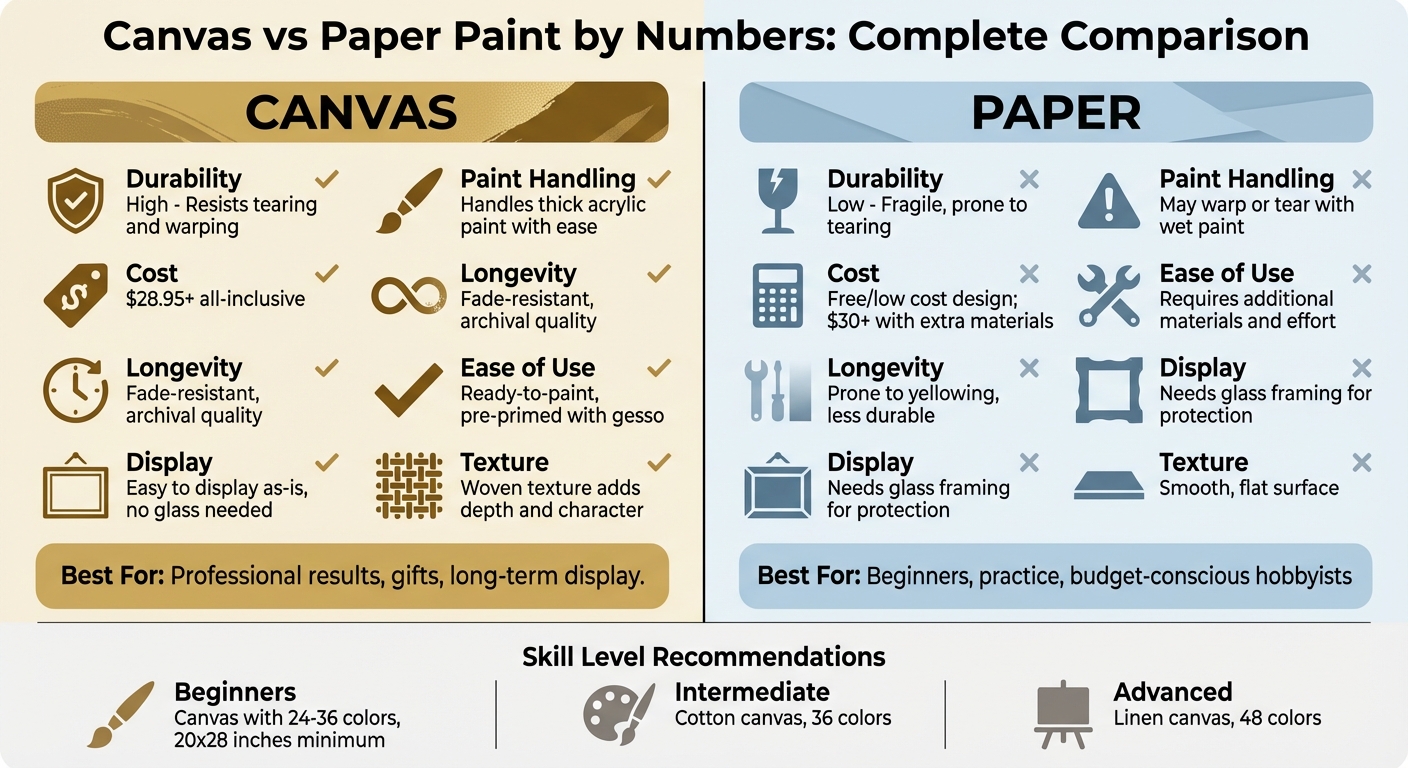
Canvas vs Paper Paint by Numbers Comparison Chart
Tips For Elevating Your Art With Paint By Numbers
Canvas Paint by Numbers: Features and Benefits
Canvas kits bring a touch of authenticity to your painting experience, offering a professional feel right out of the box. Each canvas is pre-primed with gesso, which prepares the surface for acrylic paint. This ensures smooth brushstrokes and protects the fibers from damage caused by the paint's thickness and weight. Thanks to this preparation, the canvas resists common issues like warping, tearing, and degradation, even with heavy paint application.
The woven texture of canvas adds depth and character to your artwork - something paper just can't achieve. This textured surface not only enhances brush control but also showcases visible brushstrokes, giving your piece that "gallery art" vibe. These features make canvas an excellent choice for creating vibrant, textured works that stand the test of time.
Durability and Longevity
Canvas is built to last, offering durability that paper simply can't match. Its sturdy construction resists wear and tear, making it ideal for long-term display. High-quality canvas kits often include artist-grade materials and archival inks that are fade-resistant and UV-protective, ensuring your colors stay rich and vibrant for years to come. When your masterpiece is complete, the canvas can be stretched over a wooden frame, gallery-wrapped, or mounted in a traditional frame - all without fear of the material degrading.
Enhanced Painting Experience
The textured surface of canvas transforms the painting process. Unlike flat paper, it provides a tactile experience that supports techniques like blending, shading, and layering. The surface remains stable under multiple coats of paint, so you won’t have to worry about buckling or warping. This makes canvas an excellent choice for both beginners and seasoned artists looking to refine their skills.
Who Should Choose Canvas
Canvas kits are perfect for anyone aiming to create artwork that looks polished and professional. If you’re planning to frame and display your piece or give it as a gift, canvas offers a museum-quality finish. Paint by Numbers Online caters to all skill levels, offering beginner-friendly designs with larger, easy-to-paint sections, as well as advanced kits with intricate details. Prices start at around $28.95 for standard kits, with custom photo-to-canvas options available starting at approximately $39.95.
Paper Paint by Numbers: Features and Benefits
Paper-based paint-by-numbers kits offer a different experience compared to their canvas counterparts, catering to those who prioritize simplicity and affordability. While they may not match the durability or texture of canvas, they serve as an excellent starting point for hobbyists and those exploring the craft without a large financial commitment.
Lower Cost and Easy Access
One of the standout features of paper kits is their affordability. Many designs can be downloaded for free or purchased for a small fee online. Unlike canvas kits, which often come with a full set of paints and brushes, paper kits allow you to use supplies you already have - like colored pencils, markers, or basic craft paints. This flexibility makes them a budget-friendly option.
Additionally, paper kits are usually smaller than the standard 16 x 20-inch canvas size. This not only reduces the amount of paint needed but also makes the project less intimidating for beginners. The smaller scale can help newcomers ease into the hobby without feeling overwhelmed.
Easier for Beginners
Paper kits are beginner-friendly in every sense. Unlike canvas, which may require preparation like stretching or priming, paper is ready to use straight away. The smooth surface of paper simplifies the painting process, making it easier for first-timers to follow the design. Many beginners opt to use colored pencils with these kits, treating them as sophisticated coloring pages. This approach eliminates the challenges of working with brushes and acrylic paints.
Another advantage is portability. Paper kits are lightweight and compact, allowing you to work on your project almost anywhere - whether in a small apartment or while traveling. This convenience makes paper kits an accessible option for those with limited space or on-the-go lifestyles.
Drawbacks of Paper Kits
Despite their affordability and ease of use, paper kits come with notable limitations. Standard paper often struggles to handle the thickness of acrylic paint, leading to issues like warping, buckling, or tearing when wet. Lightweight paper, especially under 140 gsm (grams per square meter), is particularly vulnerable to these problems. While heavier cardstock (300 gsm or above) offers better resistance, it still falls short of the durability provided by canvas.
Another issue is longevity. Paper lacks the archival qualities of canvas and is more prone to aging issues like yellowing, curling, and overall deterioration over time. Additionally, while acrylic paint typically dries within 10 to 15 minutes, excess moisture can cause uneven fiber expansion, resulting in permanent warping. Unlike canvas, which can support multiple layers of paint without losing its structure, paper is far less forgiving in this regard.
sbb-itb-68cf19f
Canvas vs Paper: Side-by-Side Comparison
Let's break down the key differences between canvas and paper paint-by-numbers kits to help you make an informed choice.
Canvas stands out for its durability and ability to handle thick acrylic paint without bending or tearing. It's designed to withstand the pressure of painting, making it a sturdy option for long-term use. On the other hand, paper is more delicate and prone to damage, especially under heavy paint or repeated corrections.
While paper kits might seem like a budget-friendly option at first, they often come with hidden costs. You'll likely need to purchase additional materials, which can end up costing more than an all-inclusive canvas kit. Canvas kits, by contrast, include everything you need, offering a more convenient and cost-effective solution.
Canvas also provides a more professional painting experience. It allows you to paint over mistakes easily and delivers a polished, gallery-ready finish. Paper, however, feels more like a coloring book and leaves little room for error. If you make a mistake, correcting it can damage the surface. For display, paper paintings require framing under glass to protect them, adding extra weight and expense. In contrast, canvas pieces can be displayed as-is, offering a simpler and more elegant presentation.
Comparison Table: Canvas vs Paper
| Feature | Canvas Kits | Paper Kits |
|---|---|---|
| Durability | High; resists tearing and warping | Low; fragile and easy to tear |
| Material Quality | Pre-primed with gesso; textured surface | May need priming; prone to paint bleed |
| Paint Handling | Handles thick acrylic paint with ease | Can buckle or seep with wet paint |
| Cost | $28.95–$30.00+ (all-inclusive) | Free/low for design; $30+ with extras |
| Ease of Use | Ready to use with clear instructions | Requires additional materials, effort |
| Longevity | Archival quality; easy to clean | Needs glass protection; less durable |
| Painting Experience | Professional and artistic | Similar to a coloring book |
| Portability | Portable; no glass needed | Lightweight but needs sturdy backing |
This comparison highlights the strengths and weaknesses of each option, making it easier to choose the material that best matches your needs and goals.
Choosing the Right Material for Your Skill Level
Best Materials by Skill Level
Selecting the right paint-by-numbers kit is all about matching it to your skill level. For beginners, canvas kits with 24 to 36 colors are a great starting point. They offer enough variety to create stunning results without overwhelming you with intricate details. Kits that include too many colors or small canvases can feel daunting for someone just starting out. A canvas size of at least 20x28 inches with 24–36 colors is ideal for clarity and ease of use.
If you're at an intermediate level, cotton canvas boards with around 36 colors are a solid choice. These provide a smooth surface that lets you experiment with techniques while still feeling manageable. At this stage, you can take on more complex designs that help refine your brushwork without being overly challenging.
For advanced painters, linen canvas is the go-to option. With 48 colors, these kits allow for detailed, intricate work. Linen canvas boards are particularly popular among experienced artists because of their unique texture and durability, which surpasses that of cotton. Advanced painters generally prefer canvas over paper for its longevity and precision.
Tips for Choosing the Right Material
Here are some practical tips to help you choose the right material based on your goals. If you're practicing or trying out new techniques, standard canvas kits are perfect - they come with pre-mixed paints and brushes, making them convenient and easy to use. For projects intended as gifts or for display, canvas is the better option. It's pre-primed with gesso, ensuring a professional and lasting finish.
While paper kits might seem like a budget-friendly option, they often require additional supplies, which can increase the overall cost. Canvas kits, on the other hand, include everything you need - pre-mixed, color-matched paints and brushes - making them a more cost-effective choice in the long run.
Before starting your project, consider ironing the canvas on high heat to remove any wrinkles from shipping. Also, take a digital photo of the canvas to help clarify small numbers during painting.
Paint by Numbers Online Kit Recommendations
Here are some kit recommendations from Paint by Numbers Online, tailored to different skill levels and project goals:
| Kit Type | Skill Level | Canvas Size | Colors | Best For |
|---|---|---|---|---|
| Beginner Collection | First-time painters | 16x20 inches | 24 colors | Building confidence, quick success |
| Intermediate Series | Developing skills | 16x20 to 20x28 inches | 36 colors | Refining brushwork, balanced detail |
| Advanced Gallery | Experienced artists | 20x28 inches and larger | 48 colors | Creative challenge, masterpiece quality |
| Custom Photo Kits | Intermediate to Advanced | 20x28 inches+ | 36–48 colors | Personalized gifts, portraits |
Paint by Numbers Online offers kits for every skill level, featuring wrinkle-free canvases, high-quality acrylic paints, and fine-tipped brushes. Their beginner kits are designed with larger numbered areas to make your first project enjoyable and frustration-free. Intermediate kits strike a balance between detail and ease of use, while advanced kits cater to seasoned painters looking for intricate, display-worthy designs.
Conclusion
Deciding between canvas and paper paint-by-numbers kits ultimately depends on your priorities. Canvas stands out for its durability, excellent paint adherence due to its pre-primed gesso surface, and a polished finish that can last for years. It’s a fantastic option if you’re creating artwork to display or give as a gift. Paper kits, on the other hand, might seem like a cheaper choice initially, but their fragility, tendency to tear, and the added expense of purchasing quality paints and brushes can make them less practical in the long run.
Your experience level and artistic goals should also play a big role in your choice. Beginners often find canvas kits with 24 to 36 colors and larger dimensions (at least 20×28 inches) easier to work with, as the numbers are more visible and the sections simpler to paint. Intermediate painters might prefer kits with around 36 colors for a good balance of detail, while advanced artists often gravitate toward the intricate designs offered in 48-color sets.
Canvas kits are typically more convenient, arriving ready to use with pre-mixed acrylic paints and brushes included. They’re also cost-effective, with high-quality kits generally priced between $28.95 and $30.00. In contrast, paper printables require you to source materials separately, which can quickly drive up the overall cost.
Whether you’re painting to unwind, improve your skills, or create a stunning piece of art, Paint by Numbers Online offers kits designed for every level of experience. Their beginner-friendly kits feature larger, easy-to-paint sections, while their intermediate options strike a balance between simplicity and detail. Advanced kits cater to seasoned painters seeking more intricate designs.
Browse Paint by Numbers Online’s collection to find a kit that suits your style and goals. With durable, wrinkle-free canvases, premium acrylic paints, and designs ranging from serene landscapes to detailed custom photo kits, you’ll have everything you need to confidently start your next painting adventure.
FAQs
What are the benefits of using canvas instead of paper for paint by numbers?
Using a canvas for paint-by-numbers projects offers some clear advantages. Durability tops the list - canvas holds up against moisture and aging far better than paper, meaning your artwork can stand the test of time without bending, warping, or falling apart. This makes it a fantastic option for pieces you plan to display or keep long-term.
Another perk? Canvas provides a smooth, sturdy surface that’s easy to work on, helping you achieve a polished and professional finish. Whether you’re a beginner or a more experienced artist, the canvas adds a level of reliability and quality that’s hard to beat. Plus, it’s far less likely to get damaged during handling or exposure to everyday environmental factors.
Which is more cost-effective: paper or canvas paint-by-numbers kits?
When it comes to paint-by-numbers kits, paper options are often easier on the wallet, making them a great starting point for beginners or anyone seeking a cost-effective choice. That said, they don’t hold up as well over time. Exposure to moisture or accidental damage can mean you’ll need to replace them sooner.
On the other hand, canvas kits come with a higher upfront cost but deliver better quality and durability. They’re less prone to wear and aging, making them perfect for creating artwork you want to keep and display for years. If you’re aiming for something more permanent, canvas kits are a solid long-term choice.
What is the best material for beginners starting with paint by numbers?
For those just starting out, canvas is usually the go-to option for paint by numbers. Its sturdy and durable surface not only feels more traditional but also makes it easier to practice key skills like brush control and blending colors. Plus, the pre-printed outlines on canvas tend to be clearer and more visible, allowing beginners to focus on the fun part - painting - without unnecessary hassle.
Although paper might appear more convenient at first glance, it’s less durable and often demands extra steps like priming or mounting. These added tasks can feel overwhelming for someone new to the process. In contrast, canvas offers a smoother, more enjoyable experience, making it an ideal choice for beginners eager to dive into paint by numbers with confidence.
